
Venezuela Strikes and Nicolás Maduro Capture: Frequently Asked Questions
In the early hours of Saturday morning, Venezuela was shaken by a series of explosions that lit up the sky over Caracas, sending residents scrambling for safety and prompting urgent reactions across the region.
The United States confirmed it had carried out a large‑scale strike, and President Donald Trump announced that Venezuelan President Nicolás Maduro and his wife had been captured and flown out of the country. As dawn broke, smoke hovered above military sites, civilians evacuated buildings, and questions mounted about what comes next for a nation already steeped in political turmoil.
The dramatic overnight operation, paired with new narco‑terrorism charges announced in the U.S., has left many searching for clarity on what unfolded, why it happened, and what it means for Venezuela’s future.
Frequently Asked Questions About the Venezuela Strikes
What triggered the explosions reported across Caracas?
Multiple explosions were heard around 2 a.m. local time as military sites in and around Caracas were struck. Witnesses described flashes of light, low‑flying aircraft, and a strong smell of smoke drifting across the capital. Venezuelan officials said several facilities were hit, including areas near the Miraflores presidential palace and Fort Tiuna, one of the country’s largest military complexes.
What did the United States say about the operation?
President Donald Trump confirmed that the U.S. carried out a “large scale strike” and stated that Nicolás Maduro and his wife, Cilia Flores, were captured and flown out of Venezuela. He said the operation was conducted alongside U.S. law enforcement and that more details would be provided during a scheduled news conference at Mar‑a‑Lago.
Why was Maduro taken into U.S. custody?
According to U.S. Attorney General Pam Bondi, Maduro and his wife were newly indicted in New York on narco‑terrorism and weapons‑related charges. Bondi said Maduro would “face the full wrath of American justice on American soil,” marking a significant escalation in long‑standing U.S. accusations that Maduro’s government was tied to drug trafficking networks.
Regional and Political Reactions
How did Venezuelan officials respond to the strikes?
Venezuelan leaders condemned the operation as a violation of sovereignty and international law. Vice President Delcy Rodríguez demanded proof that Maduro and his wife were alive, saying their whereabouts were unknown. Defense Minister Vladimir Padrino López vowed that the country would form a “wall of resistance” against what he called U.S. imperialism, insisting that civilians and soldiers had been killed in the attacks.
How did other countries react to the situation?
Mexico called for an immediate end to aggression and urged respect for regional stability. Russia labeled the strikes a “deeply concerning” act of aggression and pushed for an emergency meeting of the U.N. Security Council. Cuba denounced the operation as “state terrorism,” while Colombia’s president said Caracas was being bombed and called for urgent international intervention.
What was the reaction among Venezuelans living abroad?
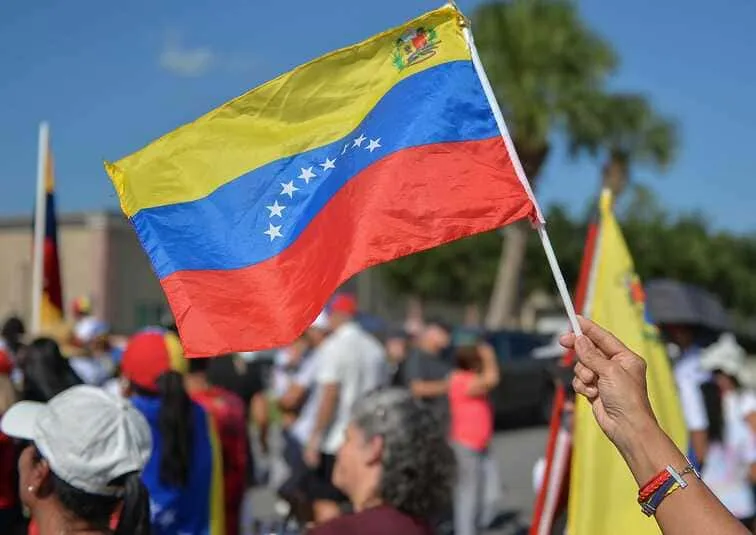
In Miami, members of the Venezuelan community gathered to celebrate after hearing that Maduro had been captured. Videos showed people waving flags, cheering, and embracing as they reacted to the news shared by President Trump on social media.
