
Majorie Taylor Greene Criticizes President Trump’s Jan. 3 Maduro Capture
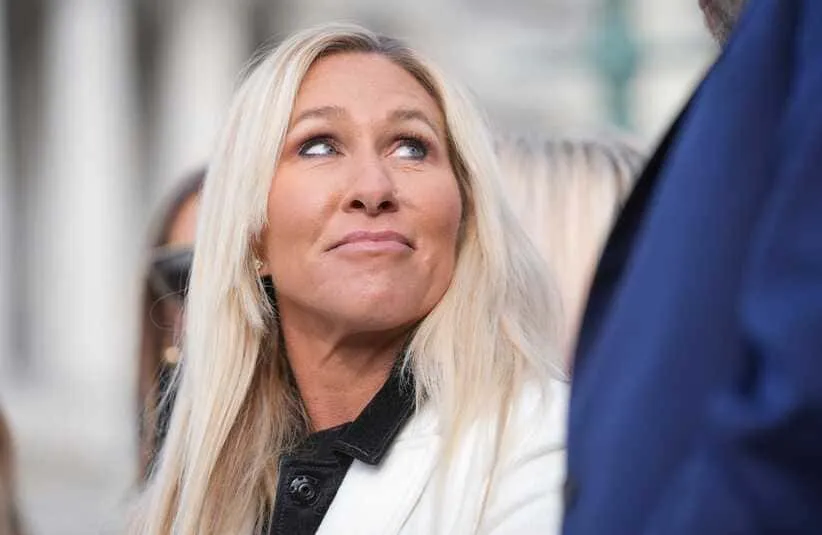
Rep. Marjorie Taylor Greene, R-Ga. criticized the Trump administration’s capture of the Venezuelan leader Nicolás Maduro. Greene spoke with NBC News’ “Meet The Press” on Sunday, expressing her displeasure at the move. While the Trump administration has framed the situation in Venezuela as a regional security issue requiring U.S. involvement to ensure stability in the Western Hemisphere, Greene rejected this classification.
Greene Disputes The Trump Administration’s Foreign Policy Focus
While speaking with NBC News‘ “Meet The Press,” she argued that the capture was part of “the same Washington playbook that we are so sick and tired of that doesn’t serve the American people.” Greene added that President Donald Trump “campaigned on Make America Great Again, that we thought was putting America first.”
She further elaborated that the concept of “America First” was understood by her constituents as a commitment to prioritizing domestic issues such as the economy, healthcare, and housing affordability. By engaging in regime change in Venezuela, Greene argued, the administration is diverting attention and resources away from the immediate struggles of U.S. citizens who have faced economic hardship over the preceding four years.
Greene Critiques Resource Allocation in South America
Greene drew historical parallels to question the long-term efficacy of the operation. She compared the current situation in Venezuela to previous U.S. involvements in the Middle East and North Africa, suggesting that initial military successes do not guarantee positive outcomes for the United States.
Per AL.com, Greene said, “Americans celebrated the liberation of the Iraqi people after Saddam Hussein; they celebrated the liberation of the Libyan people after Gaddafi.” She used these examples to caution against the enthusiasm surrounding Maduro’s capture, implying that similar actions in the past led to prolonged engagements without tangible benefits to the American public.
Strategic Disagreements Highlighted by Greene
The Representative offered an alternative strategy for where military or law enforcement resources should be directed if the goal is to protect American citizens. She argued that if the administration’s intent was to combat narco-terrorism and prevent drugs from entering the country, the focus should be on the U.S.-Mexico border rather than Caracas. Greene posited that the Mexican cartels present a direct and immediate danger to U.S. communities.
She contended that an administration truly focused on national security would prioritize dismantling these organizations over deposing a head of state in South America. This argument reinforces her long-standing emphasis on border security as the paramount national security issue, a stance she maintained throughout her tenure on the House Homeland Security Committee.
Political Context Surrounding Greene and The Trump Administration
The future of the MAGA movement without Greene in the House is going to make a lot of waves. Her departure leaves a vacuum in the House of Representatives for the isolationist wing of the Republican Party. Her willingness to publicly break with the leader of her party demonstrated a fracture that may continue to widen as the administration pursues its foreign policy goals.
The split suggests that the “America First” coalition is not a monolith. One faction, led by the President, appears willing to utilize American might to secure economic assets and regional dominance. The other faction, represented by Greene, adheres to a rigid non-interventionism that prioritizes the homeland above all global concerns.
As Greene prepares to leave office on Monday, her final dissent serves as a marker of this internal conflict. The debate over whether “America First” means engaging with the world on American terms or withdrawing from it entirely is likely to persist long after her resignation takes effect. The Venezuela operation has merely brought these simmering tensions to a boil, revealing the fragility of political alliances when core principles collide.
