
Stop Blaming Age, Superagers Are Rewriting the Brain’s Rules

Aging has a public relations problem. We are told to expect foggier memory, slower thinking and a steady slide toward cognitive decline, as if the brain signs a surrender note somewhere around retirement. But researchers studying Superagers are finding something far more interesting, and far more hopeful. Some adults in their 80s keep memory skills that match people decades younger, and science is beginning to show that this is not luck alone. It is a health story, a brain story and, increasingly, a lesson in how aging well may be more flexible than we once believed.
The Science Behind Aging Well
Superagers are older adults, typically age 80 and up, whose memory performs as well as, or better than, that of people in their 50s and 60s. That definition sounds almost impolite to the usual script about aging, which is part of what makes the science so compelling. These are not mythical outliers with perfect bodies and charmed lives. They still get arthritis, heart disease and the ordinary wear that comes with time. What stands out is their cognitive health.
Researchers are now using brain scans, activity tracking, blood tests and postmortem brain analysis to understand what sets Superagers apart. The emerging picture is both specific and surprisingly practical. Some Superagers appear to lose brain volume more slowly. Others show cellular signatures linked to stronger neuron survival and, in newer studies, signs of greater neurogenesis in the hippocampus, the brain region central to learning and memory. At the same time, scientists keep seeing the same real-world patterns surface again and again: strong social ties, physical activity, meaningful hobbies and ongoing mental engagement. In other words, the science of aging well is not magic. It is health, behavior and biology working together.
Superagers Defined, and Why the Term Matters
The term “superagers ” is used for older adults whose memory performance remains strikingly youthful. According to research highlighted by the National Institutes of Health, SuperAgers are at least 80 years old and score as well as, or better than, people in their 50s and 60s on memory testing. That is not just a cute label. It gives researchers a clear group to study and compare against typical aging, early cognitive decline and Alzheimer’s disease.
This matters because aging research has long focused on what goes wrong. Dementia, brain atrophy, and memory loss understandably dominate attention. But Superagers show the other end of the spectrum. They help scientists look for protective factors, not just risk factors. As University of Chicago researchers have argued, studying people who age exceptionally well gives a fuller picture of the aging process.
That shift changes the conversation around health. Instead of treating cognitive decline as universal and unavoidable, scientists can ask a sharper question: what preserves brain function in some people even late in life? The answer is unlikely to be a single food, supplement or personality trait. The evidence points to a mix of biology, lifestyle and environment.
What Researchers See in the Brain
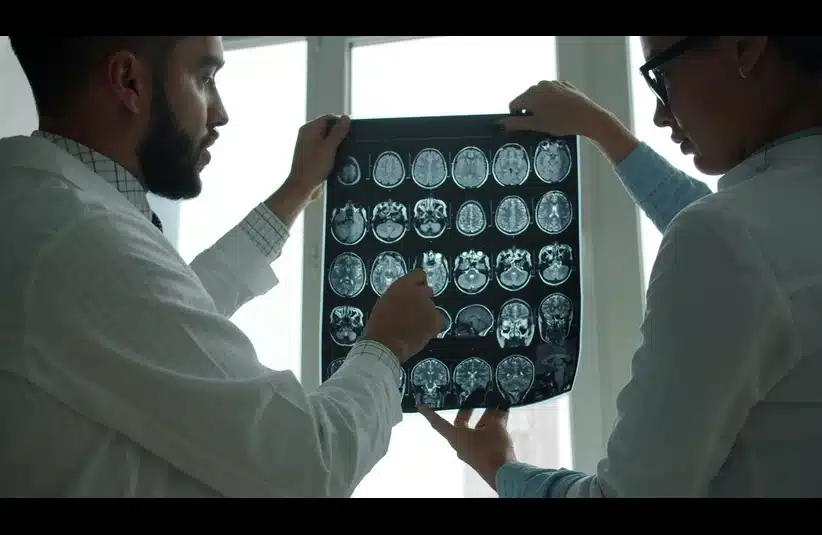
Several studies suggest that Superagers’ brains age differently. Research cited by CBC and the University of Chicago suggests that Superagers show less cortical thinning and slower brain shrinkage than their age-matched peers. Some studies also report that areas tied to memory and attention remain thicker or more resilient.
One brain region that keeps drawing attention is the hippocampus, which helps form new memories. A 2026 NIH summary of a Nature study reported that Superagers had distinct molecular signatures in hippocampal cells and more newly created neurons than other older groups. The researchers analyzed more than 350,000 individual hippocampal cells from donated brains and found that Superagers showed unique patterns associated with neuron development and cell survival.
That finding feeds into one of neuroscience’s liveliest debates: whether the adult human brain can continue to make new neurons. The latest evidence suggests the answer may be yes, at least to some degree. But scientists are still careful. Some experts see the data as a major breakthrough, while others argue that the markers used are still indirect and do not prove that those cells become fully functional neurons. Science News and National Geographic both note that the debate is not fully settled. That caution is important. It keeps the health story honest.
Why Brain Resilience May Matter More Than Perfection
Superagers are not immune to aging. They are not frozen in time, and they are not walking proof that health is just a matter of trying hard enough. What they do seem to have is resilience. Researchers quoted by Medscape describe a possible “resilience signature” in the brains of Superagers, a pattern that may help explain why cognition stays stronger for longer.
That is a more useful way to think about healthy aging. The goal is not a flawless brain. The goal is a brain that copes better with stress, disease, and time. Some Superagers may preserve stronger communication between neurons. Others may maintain cell survival pathways more effectively. Some studies also suggest they have fewer Alzheimer’s-type brain changes and denser neuron types linked to social awareness and memory.
The science is still developing, but one point is clear: healthy cognitive aging is not simply the absence of disease. It may also reflect the presence of protective biology.
What Superagers Tend to Have in Common
Social Connection is Not a Soft Factor
If there is one theme that keeps showing up in Superager research, it is social connection. Researchers from Western University and the University of Chicago have repeatedly found that Superagers tend to maintain stronger relationships and remain more engaged with others. That may sound almost too tidy, but the pattern is persistent.
This makes biological sense. Conversation, emotional reciprocity and social problem-solving all challenge the brain in real time. They require attention, memory, language and flexibility. Social isolation, by contrast, is associated with poorer health outcomes across the board. Scientists studying Superagers increasingly argue that connection is not just nice to have in later life. It is a major health factor.
Movement Still Counts, Even if You Start Late
Physical activity also shows up consistently in the research. CBC reported that a typical Superager in one ongoing project gets about 36 minutes of moderate to vigorous physical activity per day, including walking, biking, or swimming. That exceeds what many adults achieve.
The encouraging part is that many Superagers were not lifelong athletes. Researchers told CBC that some only became more active in their 50s and 60s. That point deserves more attention than it usually gets. Too many people treat the health benefits of exercise like an exclusive club for those who started young. The evidence suggests otherwise. The brain and body still respond to better habits later in life.
Meaning and Purpose May Protect the Brain
Another recurring feature is purpose. Superagers often stay involved in meaningful hobbies, service, or creative work. In the CBC profile of 101-year-old violinist Morry Kernerman, music was not just entertainment. It gave him structure, challenge, and meaning. He still studied scores, taught others, and stayed engaged in the arts.
This may matter because mentally rich activities are rarely one-dimensional. They combine memory, emotion, attention, learning, and social connection. They also give people a reason to stay involved in life, which may be as important for health as any crossword puzzle ever marketed as brain insurance.
Signs and Symptoms to Watch for That May Signal Cognitive Decline
Not every memory lapse means something serious. Forgetting a name, misplacing keys, or walking into a room and blanking on why you are there can happen at any age. Normal aging may slow recall somewhat. What raises more concern is a pattern that starts to interfere with daily functioning.
Warning signs can include getting lost in familiar places, repeating the same questions often, struggling to follow conversations, having unusual trouble managing bills or medications, or showing noticeable changes in judgment, planning, or language. Family members may also notice withdrawal from social activities, which can be both a symptom and a risk factor for worsening cognitive health.
The National Institute on Aging and other experts emphasize that dementia is not a normal part of aging. If memory or thinking changes are becoming persistent, disruptive, or alarming, it is worth discussing them with a clinician. Early evaluation matters. Some causes of cognitive symptoms are treatable, including sleep problems, depression, hearing loss, vitamin deficiencies, and medication effects.
That last point deserves emphasis because health is not only about the brain itself. Hearing loss, poor sleep and social isolation can all place extra strain on cognitive function. If a person withdraws because conversation has become exhausting, the brain loses stimulation and connection at the same time. That is not just inconvenient. It is consequential.
It’s Never Too Late to Adopt Healthier Habits
The most useful message in the Superagers research is also the least flashy. There is no evidence that one miracle habit guarantees a younger brain. There is, however, growing evidence that lifestyle changes still matter later in life.
Researchers from Harvard, Western University and the University of Chicago all point to the same broad pillars of cognitive health: regular movement, social engagement, mentally challenging activities, good sleep, stress reduction and a heart-healthy diet. Harvard experts note that what helps the cardiovascular system often helps the brain as well. Mediterranean-style eating patterns, with fruits, vegetables, whole grains, legumes, fish and healthy fats, are often cited as supportive of long-term brain health.
Sleep also deserves a promotion. It is easy to treat sleep as a luxury and then wonder why memory, mood and concentration start acting like overworked interns. Researchers increasingly view sleep as an active biological process essential to brain maintenance and recovery. Chronic sleep problems can undermine both mental sharpness and overall health.
The good news is that the door does not slam shut at 40, 60 or 80. Researchers studying Superagers have specifically noted that some became more active later in life. Even among people at higher risk of dementia, lifestyle changes can improve cognitive measures. That does not mean everyone can become a Superager. It means the brain remains responsive longer than old assumptions allowed.
The Real Lesson From Superagers
Superagers challenge one of the laziest ideas in health, that getting older automatically means becoming mentally frail. The research does not promise immortality, genius or a brain that behaves as if it were 25 forever. What it does offer is better, a more accurate map of aging.
That map suggests cognitive decline is not uniform, and it is not always inevitable. Some brains retain stronger structure. Some preserve more favorable cell signatures. Many people who age well stay socially connected, physically active and mentally engaged. The story is not tidy, and it is not finished. But it is far more hopeful than the old script.
Aging is still real. So is the evidence that how we live can shape how we age. Superagers are not proof that time can be defeated. They are proof that the brain may have more staying power than we gave it credit for.
