
Contender: OCEARCH’s Largest Known Male Great White Shark
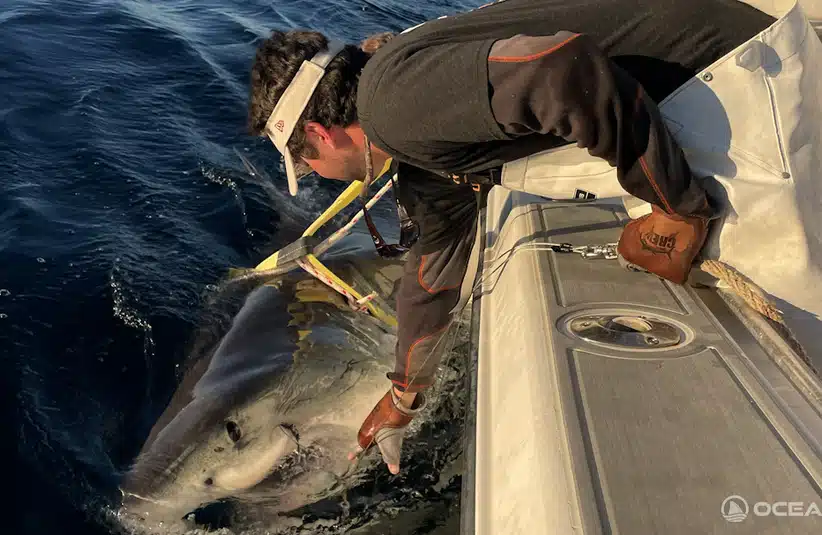
Contender, a great white shark measuring in at nearly 14 ft. and weighing approximately 1600 lbs, first tagged Jan. 17, 2025, and has swam 6,392 miles. He has been sighted off the FL/GA border in the Blake Plateau. He is the largest great white shark to be tagged by OCEARCH.
Contender Returns
According to Fox Weather, Contender has appeared at the surface several times, being pinged by the tag placed on him by OCEARCH in a similar area, though closer to the coastline in 2025. The way the tag works, according to OCEARCH, is that it pings when the shark comes to the surface, the tag sends a signal, and is received by a satellite that updates the travel log. By OCEARCH’s best estimate, he was 32 years old when they managed to tag him. While many great white sharks spend the colder months near FL for food, Contender might bear some crucial information for scientists.
He is considered the Atlantic Ocean’s largest male great white shark, coming back to the familiar location of the FL/GA coastline. During his time, Contender has gone up the coast, with extended stays around the Carolinas before going up into Canadian waters. After a while, he comes back south near where he was first found, along the Florida coast. Per Fox Weather, he pinged many times near the Florida coast. Contender’s last known location ping happened on March 19, 2026, north of Jacksonville.
OCEARCH and Studies
USA Today highlighted a ping from back on Nov. 12, 2025, where Contender had shown up near Atlantic City. OCEARCH’s shark tracking app even recorded in late Sept. when he swam through the Gulf of St. Lawrence. People, scientists included, have been fascinated by sharks for decades. Finding Contender and managing to tag him has allowed them to track the migration of the great white shark throughout the seasons.
What makes him an intriguing find is the SPOT tag on his fin, providing real-time data with a timeline of approximately 5 years, it doesn’t just track his movements. They are able to collect and analyze samples from other creatures while getting a map blueprint of the life Contender. The data they can get from him and other creatures in his surroundings could give them a glimpse into the lives of many ecosystems in the water.
Why Tracking Is Critical
As mentioned, understanding movement and habitat can be important steps to understanding great white shark progress. Per OCEARCH’s own website, they are always on the move. They use satellite data to see where they are in real time, with filters for species, in Contender’s case, by name or by location. Some known United States hotspots due to OCEARCH’s proactive nature are Florida, Cape Cod, the Carolinas, and California. They acknowledge that, for most shark species, they are harmless. Great white sharks are one of 4 breeds responsible for most bites, but they are incredibly rare.
Contender’s species is an apex predator, hunting through stealth as they approach from below before coming through the surface with strong jaws. Their diet can consist of things as small as fish to whale carcasses, with seals and smaller sharks somewhere between.
What might catch people by surprise is that great whites can weigh over 5,000 lbs, nearly the weight of a Ford F-150 and as large as 20 ft. The female great white shark is the largest, with Deep Blue being the biggest great white ever recorded. Her estimated measurements were 4,500 lbs and between 20-21 ft long. She is estimated to be between 50 and 60 years old.
Great white sharks reproduce by fertilizing the female internally with their pelvic fins, claspers. The eggs then hatch inside, resulting in her giving live birth.
OCEARCH’s research helps to create data needed for conservation policies, as they are among the list of endangered species. The threats they face come from overfishing and habitat loss. If you’d like more information on OCEARCH and their work on research and conservation, or what educational material is available, their site has a lot to offer.
