
DOJ Removes Jan. 6 Case Pages, Calls Material ‘Partisan Propaganda’ Amid Controversial Policy Shift
The Justice Department has quietly done something not exactly quiet at all. The United States Department of Justice has confirmed it removed multiple web pages documenting prosecutions tied to the Jan. 6 Capitol attack, a move it is now openly defending while also describing portions of the material as “partisan propaganda.” That framing is doing a lot of work here, and Washington is noticing.
The removed pages included press releases on charges, convictions and sentencing stemming from the 2021 Capitol breach, when supporters of then-President Donald Trump entered the Capitol during the certification of the 2020 election results, which he lost to Joe Biden. It is the kind of historical record that usually sits untouched on agency websites for years. This time, it didn’t.
DOJ removes Jan. 6 Case Pages and Defends ‘Partisan Propaganda’ Label
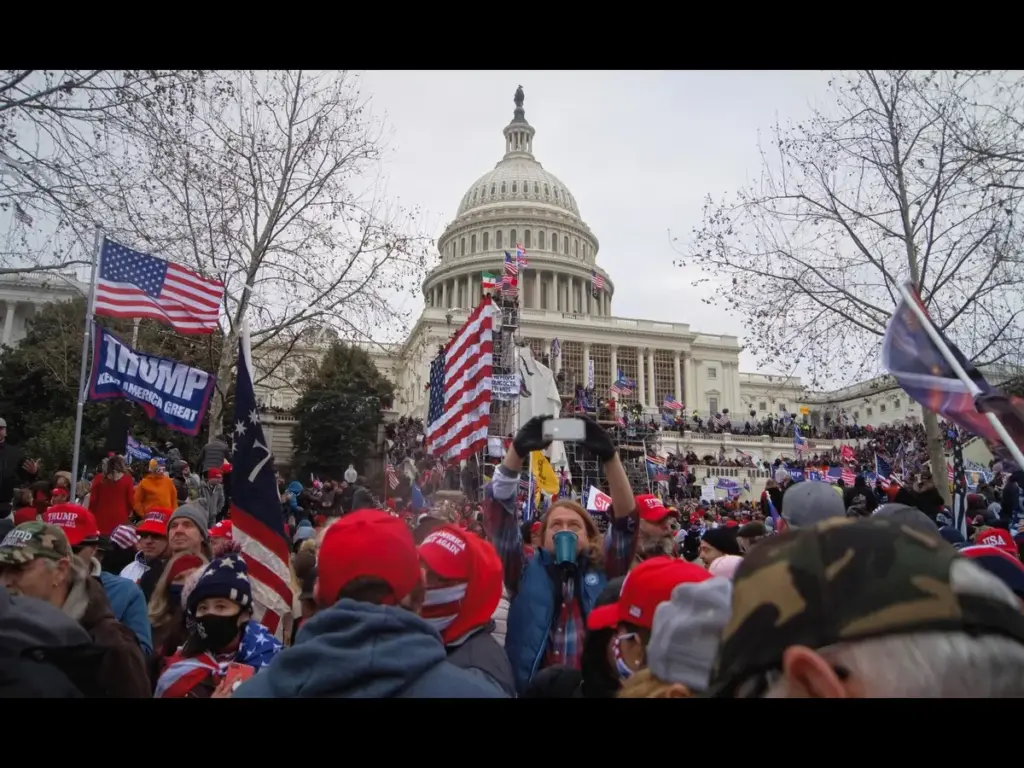
According to CBS News, the Justice Department acknowledged removing the materials after questions surfaced online about missing Jan. 6-related pages. In its response through a rapid communications channel, the department pushed back on the idea that the action was discreet, saying there was “nothing ‘quiet’ about it.”
Officials said the decision reflects a broader review of prior Justice Department messaging tied to politically sensitive prosecutions. The department also described some of the archived material as reflecting politically driven framing of the cases, language that immediately sharpened the debate over how federal law enforcement documents its own history.
Among the removed content were press releases tied to high-profile prosecutions involving members of the Proud Boys and Oath Keepers, two organizations central to some of the most significant seditious conspiracy cases brought after the Capitol attack.
Notably, the department has not publicly released a full inventory of what was removed or clarified whether the pages will be restored in another format. That lack of clarity has added to questions about how the records will ultimately be preserved.
Why DOJ Jan. 6 Case Page Removals Matter For the Historical Record
This is not just about website housekeeping. Federal press releases, especially in major criminal cases, often function as a public archive of record. They are frequently cited by journalists, researchers and courts as a timeline of how cases unfolded.
The timing also matters. The removals come alongside broader policy shifts since Donald Trump returned to office in January 2025. On his first day back in office, Trump issued pardons, commutations or directed dismissal of cases involving more than 1,500 people charged in connection with the Capitol attack. This includes individuals convicted of assaulting law enforcement officers using items like flagpoles, a hockey stick and a crutch.
That shift has already reshaped how many Jan. 6-related prosecutions are treated at the federal level. Removing the underlying public-facing documentation adds another layer to how that history is being reframed or at least reorganized. There is also a practical question here that keeps coming up in Washington: when does updating an archive become rewriting it?
Political Reaction Grows as DOJ Faces Scrutiny Over Jan. 6 Changes
The decision has drawn criticism from lawmakers and legal observers who argue the removals risk weakening the public record of one of the most extensively prosecuted events in modern U.S. history. At the same time, supporters of the move say federal agencies routinely revise or retire older web content as administrations change, particularly when messaging is tied to prior policy frameworks.
The Justice Department itself has framed the move in political terms, saying it is working to reverse what it calls the “weaponization” of federal law enforcement under the Biden administration. That language has become a consistent feature of how the department now describes earlier prosecutorial decisions tied to Jan. 6.
Complicating matters further, the department recently announced the creation of a $1.776 billion fund intended to compensate Trump allies who claim they were improperly investigated or prosecuted. Acting Attorney General Todd Blanche has not ruled out eligibility for individuals convicted of violent offenses, a detail that has already triggered bipartisan pushback in Congress. So now the debate is not only about what happened in 2021, but how the federal government is choosing to describe it in 2026.
What Comes Next for DOJ Jan. 6 Records and Prosecutions
The Justice Department has not said whether the removed Jan. 6 pages will be archived, rewritten or permanently taken down. That ambiguity is likely to keep this issue alive, especially as ongoing legal actions tied to Capitol breach cases continue to move through the courts.
Recent filings have included moves to vacate or dismiss certain seditious conspiracy convictions, including cases involving leadership figures in both the Proud Boys and Oath Keepers. Some of those requests have already been granted by federal courts, while others are still working their way through the system.
For now, the broader picture looks less like a single decision and more like a series of overlapping ones: legal reversals, policy shifts and now the reshaping of the public archive that once documented it all. And in Washington, that combination tends to raise one familiar question: who gets to define the official record when the record itself starts changing?
Additional News From Total Apex Herald
- More Declassified UFO Files Released By The Pentagon
- United States-Iran Negotiation Talks Advance Amid Strait of Hormuz Disputes
FAQ
Why did the DOJ remove Jan. 6 case pages?
The department said it removed some pages as part of a review of prior messaging and described certain materials as “partisan propaganda.”
Does this affect ongoing Jan. 6 cases?
The DOJ has not indicated that ongoing court proceedings are affected, though some related convictions are being challenged or reconsidered.
What groups were mentioned in the removals?
Pages included references to cases involving members of the Proud Boys and Oath Keepers.
Is the DOJ restoring the removed pages?
As of now, the department has not confirmed whether the pages will be restored or archived elsewhere.
