
California Republican Congressman Doug LaMalfa dies at 65
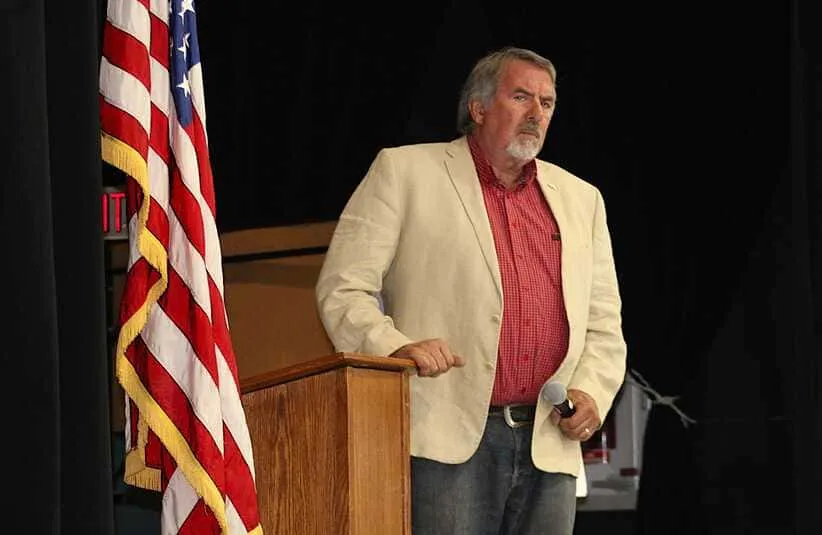
Washington is mourning the sudden loss of Doug LaMalfa, the rice farmer turned politician whose booming voice and cowboy boots became a fixture in the halls of Congress for more than a decade. The long-time Republican representative from Northern California died unexpectedly, House GOP leadership announced on Tuesday. He was 65 years old.
LaMalfa was a fourth-generation farmer who carried the concerns of rural America in his bones. His passing is a personal tragedy for his family and a significant blow to a community that viewed him as a relentless champion for water rights and wildfire recovery. But beyond the grief, his absence creates an immediate and precarious political reality. The House of Representatives, already operating on a razor’s edge, now faces a mathematical crisis that could stall the legislative agenda.
A Voice for Rural America Falling Silent
LaMalfa didn’t just represent his district; he embodied it. Born into a family with deep roots in California agriculture, he managed the family rice farm before bringing that practical, dirt-under-the-fingernails perspective to public service. Colleagues often noted that LaMalfa was happiest when discussing heavy machinery, crop yields, or the intricacies of water management—topics that were life-and-death for his constituents.
His tenure in Congress was defined by his response to tragedy. When deadly wildfires ravaged his home state, decimating towns like Paradise within his own district, LaMalfa became the face of federal recovery efforts. He walked through the ash, comforted families who had lost everything, and fought in Washington for the funds needed to rebuild. It was a role he never sought but one he shouldered with a quiet, heavy grace.
Tributes poured in immediately following the announcement, painting a picture of a man who was deeply respected across the aisle despite the polarized climate. Rep. Richard Hudson, the House GOP campaign chief and a close personal friend, remembered LaMalfa not as a politician, but as an “amigo” who loved NASCAR and honest work. “Doug brought grit, authenticity, and conviction to everything he did in public service,” Hudson said. “He was never afraid to fight for rural communities, farmers, and working families.”
The Fragile Balance of Power in the House
While the personal loss is profound, the political implications of LaMalfa’s death are immediate and severe. His passing leaves Speaker Mike Johnson presiding over one of the thinnest House majorities in modern American history. The math is unforgiving: the current House makeup now stands at 218 Republicans and 213 Democrats.
This razor-thin margin means Speaker Johnson effectively has no wiggle room. To pass any partisan legislation, he can now only afford to lose two Republican votes on the floor. If three members defect, the measure fails. In a conference known for its internal fractures and spirited disagreements, holding that line will require a level of discipline that has been historically difficult to maintain. Every absence, every illness, and every disagreement now carries the weight of a potential legislative standstill.
The process to fill LaMalfa’s seat will begin soon, but it cannot happen overnight. California will need to hold a special election in the coming weeks to find a successor. Political analysts suggest the seat is likely to remain in Republican control. LaMalfa’s district is a conservative stronghold, an area that President Donald Trump carried by roughly 25 points in the last election.
Summary of Key Developments
- Sudden Passing: Rep. Doug LaMalfa, a 65-year-old Republican from Northern California, died unexpectedly, leaving behind a legacy as a fierce advocate for agriculture and wildfire victims.
- Political Impact: His death reduces the House GOP majority to just 218 seats against 213 Democrats, leaving Speaker Mike Johnson with almost zero margin for error in upcoming votes.
- Special Election: A special election will be held to fill the vacant seat; while the district is currently a GOP stronghold, future redistricting could alter the political landscape by 2026.
