
Supreme Court Rules on Trump’s Deployment of National Guard to Chicago
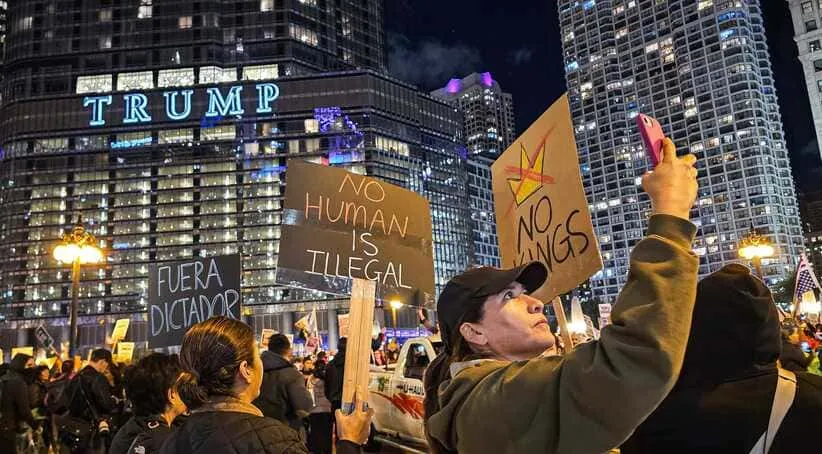
In a significant legal development regarding the limits of executive power, the Supreme Court on Tuesday denied a request from President Trump to deploy National Guard troops to the Chicago area. The decision marks a pivotal moment in the ongoing constitutional tug-of-war between the federal government and Democratic-led states over immigration enforcement and domestic policing.
Supreme Court’s Ruling on National Guard Deployment to Chicago
The 6-3 ruling by the high court maintains a lower-court order that temporarily bars the administration from sending militarized forces into Illinois against the wishes of state leadership. The unsigned order from the Supreme Court highlighted a lack of legal justification for the move, stating, per Fox News “At this preliminary stage, the government has failed to identify a source of authority that would allow the military to execute the laws in Illinois.”
Justices Samuel Alito, Neil Gorsuch, and Clarence Thomas dissented from the majority opinion, signaling a divide within the court regarding the scope of presidential authority in times of perceived domestic crisis. The human element of the ruling—the prospect of armed soldiers patrolling civilian streets—was a central theme in the reaction from the state’s top legal officer.
Illinois Officials React to Supreme Court Decision
For state officials in Illinois, the ruling provided immediate relief and was characterized as a victory for state sovereignty. The tension between Governor JB Pritzker and the White House has been palpable, with the Governor vehemently opposing the presence of federalized troops on state soil. Following the ruling, Governor Pritzker took to social media to express his approval.
As reported by X (formerly Twitter), Pritzker stated that the National Guard decision was “a big win for Illinois and American democracy.” He further elaborated on the constitutional implications, noting his satisfaction that the Supreme Court affirmed that the President “did not have the authority to deploy the federalized guard in Illinois.”
Administration Defends Strategy Before Supreme Court
Despite the setback, the White House maintains that the attempted the National Guard deployment was necessary for public safety and the enforcement of federal law. White House spokesperson Abigail Jackson responded to the ruling by reiterating the President’s commitment to immigration enforcement and the protection of federal assets.
Jackson stated that the President’s goal was to protect federal law enforcement officers, and to ensure rioters did not destroy federal buildings and property, arguing that the court’s decision did not detract from that core agenda. This highlights the administration’s continued focus on using the National Guard as a tool for domestic law enforcement, a strategy that has faced hurdles across the country.
Broader Legal Battles Beyond the Supreme Court
The Supreme Court ruling regarding Chicago is not an isolated incident but rather part of a widespread legal struggle involving multiple states. The administration is currently facing headwinds in several jurisdictions regarding similar deployment attempts. In California, a federal judge ruled in September that the administration had illegally instructed the National Guard to engage in law enforcement activities during protests in Los Angeles.
Similarly, in Oregon, a federal judge temporarily blocked the deployment of troops after state officials sued over plans to send 200 members from California to the region. The legal landscape in Washington, D.C. presents a more complex scenario. While a federal judge ruled in November that troop deployment there was unlawful, the administration has appealed. Recently, a federal appeals court ruled that troops could remain in the capital for the time being, following a shooting incident near the White House.
Differing State Responses to Federal Troops
While the Supreme Court has halted the deployment in Illinois, not all states are resisting federal assistance. The divide largely falls along partisan lines, with Republican-led states welcoming the additional manpower. In Louisiana, Governor Jeff Landry announced that his request for federal troops in New Orleans had been granted.
Consequently, 350 National Guard members are scheduled to deploy to the city, where they will remain through February. Similarly, Tennessee Governor Bill Lee previously joined the President to sign a memorandum focused on “restoring law and order” in Memphis, although that action was also temporarily blocked by a judge in November.
Final Thoughts
As the legal challenges continue to wind their way through the judiciary, the Supreme Court remains the ultimate arbiter in defining the balance of power between state governors and the White House. The administration has not backed off their position that the National Guard deployments are a necessary step in what they claim.
