
War and Urgent Negotiations: Where Iran, Israel, the United States and Lebanon Stand
Israel and Lebanon are set to begin negotiations in Washington this week, marking a significant diplomatic development amid escalating regional tensions, as U.S.-Iran talks collapsed over the weekend. In an effort to follow the ongoing war between the United States, Israel, Iran and Lebanon, and the latest developments, Israeli Prime Minister Benjamin Netanyahu has authorized negotiations with Lebanon. Moving forward with key points on what has happened over the weekend and how it has been shaping negotiations.
Negotiation Talks and What Happened
The Lebanese presidency on X posted at 4:04 p.m. EDT (11:04 p.m. Beirut) on April 10, 2026, accepting negotiations with Israel, scheduled for Tuesday, April 14, 2026, in Washington. They announced this two hours after a conference call, which the statement says began at 2 p.m. EDT (9 p.m. Beirut), the first between Lebanon, represented by Nada Hamadeh Moawad, their Ambassador in Washington, and Israel, represented by Yechiel Leiter, their Ambassador in Washington. This would include Michel Issa, the U.S. Ambassador to Beirut, also currently in Washington. The U.S Department of State will be fulfilling the position of mediator between the two countries.
With the announcement of the Israel and Lebanon negotiations being greenlit, Vice President Vance was set to meet for his own negotiations with Iran in Pakistan. Iran’s lead negotiator, Mohammad Bagher Qalibaf, is the current executive leader following the deaths of Supreme Leader Ali Khamenei (Feb. 28, 2026, during a joint U.S.-Israeli airstrike) and Head of the Supreme National Security Council (SNSC) Chair Ali Larijani (died March 17, 2026, during an Israeli airstrike). His appointment came as his tenure as a commander and pilot for the Revolutionary Guard (IRGC) had him held in high regard with Iran’s security and military agencies.
Things Begin At A Non-Start For Negotiations
Islamabad’s negotiation meeting was a cumulative week’s worth of diplomacy by Pakistan’s leaders. They had picked the city before they even took the lead as the mediator to the U.S. and Iran’s two-week ceasefire. With Pakistan becoming the center stage of this spectacle, Islamabad went from a quiet location to a high-profile capital with the whole world’s eyes watching. The negotiations would begin on April 11, 2026, at 9 a.m. EDT (4 p.m. Beirut / 6 p.m. Islamabad time).
Negotiations began between Vice President Vance and Mohammad Bagher Qalibaf, a tense and fragile ceasefire, strained by attacks on Lebanon and Iran’s refusal to release control of the Strait of Hormuz. Both sides had their demands, Iran with its 10-point plan and an immovable position on Israel’s attacks on Hezbollah being facets of their bargain. On top of these, they wanted the release of their frozen assets, a guarantee for their nuclear program and fees for ships passing through the Strait of Hormuz.
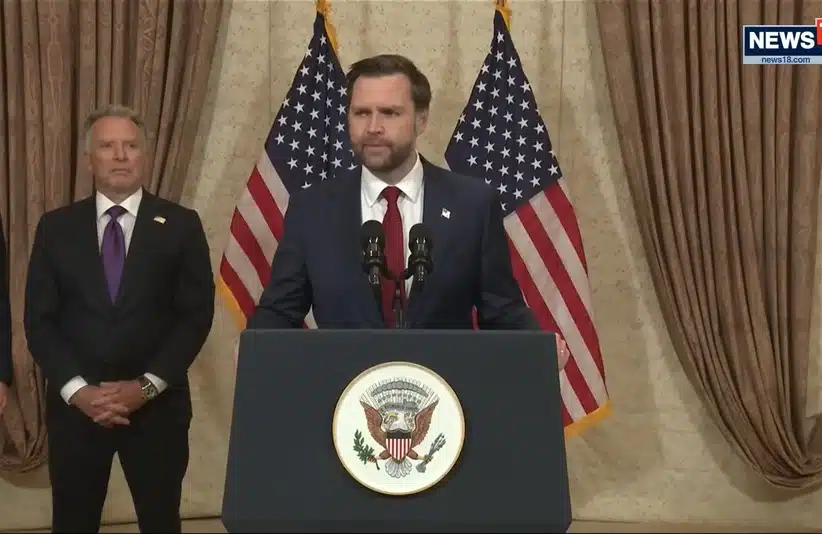
After an intense 21-hour negotiation that stretched into April 12, 2026, 6 a.m. EDT (April 12, 2026, 1 p.m. Beirut / 3 p.m. Islamabad), Vice President Vance left with no resolution. Before boarding Air Force Two, he had a conference in Islamabad. It became clear that, while they didn’t achieve an agreement, he felt that Iran was the crux of an agreement not being reached. One of the points of contention was that they would not accept the dismissal of Iran’s seeking nuclear weapons. As he was departing, he left Iran with the knowledge that the offer on the table was both the best and the final offer.
This comes after President Trump had reiterated on Friday that the objective of the war was to prevent the Iranians from obtaining nuclear capabilities.
More Trouble Stirs Amid Negotiations
At the same time that Vice President Vance and Mohammad Bagher Qalibaf were sitting down, protests broke out in Riad al-Solh Square, outraged at the decision to negotiate with Israel. Flags waved at the protest included Hezbollah, the Amal Movement, Iran and Lebanon. However, it would appear the leaders for the movements distanced themselves, both saying for supporters to preserve stability and peace. They called on their supporters to not be drawn into division, with the Future Movement also denouncing their flags at the demonstration.
While the negotiations had just begun, nearly an hour later at 9:48 a.m. EDT (4:48 p.m. Beirut), Prime Minister Nawaf Salam announced the postponement of his trip due to internal circumstances and his duty to the people of Lebanon. Instead, he would be diligently working from Beirut. Through L’Orient Today reporting, it would appear threats were made from Iran, should he sideline the militant group during peace talks with Israel.
With Hezbollah holding extreme influence over Lebanon, Iran’s threat made clear that Hezbollah’s role would remain in Lebanon. This will cause friction in attempts to negotiate between Israel and Lebanon in Washington on Tuesday. The Prime Minister Nawaf Salam was set to meet U.S. Secretary of State Marco Rubio during the visit, the first by a senior Lebanese official since President Trump’s return to office.
The State of the Strait and Lebanon
Prime Minister Benjamin Netanyahu went to the troops in Southern Lebanon, telling them the fight was not over. During his visit, he toured the new “security zone,” an 8-10 kilometer buffer, where he recorded a message for the Israeli people and posted it on X at nearly 1 p.m. EDT (8 p.m. Beirut). He has continued to apply pressure against the Iran-led Hezbollah in Lebanon even as Salam assured that they are working to negotiate an end to the war and remove Israeli combatants from Lebanon. Netanyahu has no intention of leaving Lebanon until they have secured the crippling of Hezbollah and its removal from Lebanon.
With the upcoming negotiations set for Tuesday, April 14, 2026, the meetings’ focus is now with the Ambassadors, as each Prime Minister is focused on the ground. Moawad and Leiter are now the last line of diplomacy for the Washington meeting.
