
Victory For Alaska’s Tongass National Forest: Saving Trees From The Timber Industry
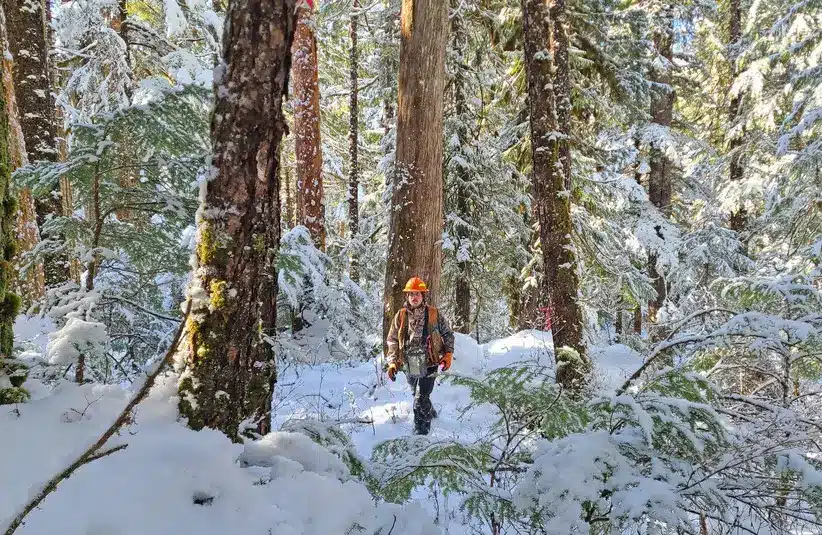
March 13, 2026, saw a victory as Federal Judge Sharon Gleason dismissed a lawsuit that was filed by Viking Lumber, Alcan Timber, and the Alaska Forest Association. The lawsuit was seeking to reinstate management plans that would lead to logging in the world’s largest temperate old-growth rainforest. While this is a win for now, it may not be for long, as there are other plans now in the works to allow logging in Alaska’s Tongass National Forest.
History of the Tongass Timber Reform Act
The Tongass Timber Reform Act (H.R. 987 / Public Law 101-626) was enacted in 1990. It significantly amended the Alaska National Interest Lands Conservation Act (ANILCA), shifting management of the Tongass National Forest from expansive timber production to environmental conservation and economic accountability. It repealed Section 705(a) of ANILCA, a mandate to harvest 4.5 billion board feet per decade, with a guaranteed annual federal support of at minimum $40 million.
With the removal of timber-first policies, the act required the Forest Service to adopt standard, market-driven financial and operational practices used by other national forests. The Secretary of Agriculture was mandated to aim for a timber supply that satisfied market demand, assuming that doing so does not compromise the balanced, long-term, and sustainable management of all forest resources. It also introduced strict safeguards for critical ecosystems, such as fisheries protection and land withdrawals.
There was now a 100-foot-wide mandatory buffer zone to protect salmon habitats from logging-related erosion and temperature changes. This protection was labeled as Class I and Class II, based on the importance of the life cycle of salmon in the area. The land withdrawals resulted in approximately 1 million acres being removed from the timber base. Around 300,000 acres were designated as new wilderness, with over 700,000 acres classified as Land Use Designation II (LUD II), banning commercial timber harvesting and permitting flexible management compared to formal wilderness.
Judge’s Stance on the Tongass National Forest
Federal Judge Sharon Gleason, who oversaw the litigation from Viking Lumber, Alcan Timber, and the Alaska Forest Association as they sought to sue the U.S. Department of Agriculture, found that the Tongass Timber Reform Act did not impose a mandatory duty on the Forest Service to ensure market demand was met by Tongass timber sales. Through reporting from Juneau Independent, the judge herself wrote, “Whether the harvest levels are designed to actually meet market demand is a discretionary agency action, not a mandatory requirement imposed by the TTRA on the Forest Service.”
She also declined to take on their argument on whether there was a violation of the Administrative Procedure Act, and determined the 2021 announcement was only that, an announcement, and not a real change in federal law. Nor did she analyze whether it could have met the standards had it been a formal rulemaking process. According to those representing the plaintiffs, Pacific Legal Foundation, the Forest Service’s approach has been debilitating to plaintiffs.
Alternatively, Attorneys for those on the environmental and tribal groups praised the ruling as it clarified that federal law does not prioritize market demand over conservation in the world’s largest known temperate old-growth rainforest. Overall, it is clear that the decision reinforces the federal government’s authority to prioritize conservation over commercial timber demands in the Tongass National Forest.
Future of the Tongass
Looking for any updates regarding the Tongass National Forest has led to the Federal Register, where the U.S. Department of Agriculture, Forest Service, is said to be revising the land management plan. Comments on the plan were to be made by March 20, 2026, as the drafted plan and draft environmental impact statement are anticipated during the fall. At that time, there will be a 90-day comment period, which will be used to update the final revision of the plan, expected during May 2027. None of the dates is set in stone and can change at a moment’s notice.
The purpose of the Tongass Land and Resource Management Plan is the fact that, as per the Federal Register notice, they are supposed to be revised every 15 years, with the last revision being nearly 30 years ago. There are two Executive Orders, 14225, known as the “Immediate Expansion of American Timber Production”, and 14153, “Unleashing Alaska’s Extraordinary Resource Potential”, made in 2025, that are also cited as drivers to expand domestic timber production.
Beyond timber, they also need to re-evaluate land designations supporting the region’s evolving tourism, mining, and renewable energy sectors. A central pillar of the revision is the administration’s proposal to formally exempt the Tongass National Forest from the 2001 Roadless Rule, which currently protects roughly 9 million acres from industrial road construction and clear-cutting. This intends to align the new land management plan with a concurrent rulemaking process that would rescind these protections.
