
Strait of Hormuz Under Intense Pressure as Iran Negotiations Falter and PGSA Expands Control
Regional diplomatic activity and military developments continued to unfold, with details emerging about points of friction in the United States–Iran negotiation track. Expanding Iranian efforts to assert control over maritime transit in the Strait of Hormuz, shifting roles among Iranian political figures, and a series of military actions have shaped the environment surrounding the talks. With the Islamic Revolutionary Guards Corps (IRGC) initiating military control through the Persian Gulf Strait Authority (PGSA) and the United States seeking an open waterway, the situation remains strained in the Middle East.
Reported Memorandum and Conflicting Accounts
The Institute for the Study of War (ISW) cited Axios’ reporting that unspecified United States officials informed Axios that the United States and Iranian negotiation teams had reached a draft 60-day memorandum of understanding to extend the ceasefire. The goal was to launch discussions and negotiations regarding nuclear programs in Iran. As of May 29, 2026, neither Iranian Supreme Leader Mojtaba Khamenei nor President Donald Trump had approved the agreement.
The unnamed officials further said the Iranian negotiations team had authorization from their senior leadership to sign the deal. According to the ISW, the Tasnim News Agency cited a source with ties to the negotiating team and denied that an agreement had been finalized. The ISW’s May 29, 2026 Special Update noted that President Donald Trump had reiterated on Truth Social that Iran could not have nuclear weapons and that the Strait of Hormuz must be completely open and free of potential risks to vessels.
In the ISW’s coverage of Axios’ report, the draft included Iran accepting unrestricted shipping through the international waterway without tolls or harassment along the Strait. All mines laid within the waters are to be removed within 30 days; in turn, the United States would lift the blockade on vessels using Iranian ports. Though Iran has repeatedly said the waterway is open to shipping, it has also been coercing countries to comply with its PGSA mechanism to extort insurance and other fees as a form of safety against retaliation for using the waterway.
Waterway Control Statements and Negotiation Roles
The Iranian Supreme Leader had already posted on the Rahbar Enghelab Telegram channel on May 27, 2026, that Iran would not relinquish control of the waterway, instead urging agencies to control it for economic relief. The ISW cited an Iran International article on May 28, 2026, questioning whether Parliament Speaker Mohammad Bagher Ghalibaf was coordinating with Mojtaba Khamenei. ISW noted on May 28, 2026, that Ghalibaf’s appearance in the report marked his return to the negotiation track.
The ISW cited a United States Treasury Department press release from the Office of Foreign Assets Control taking action against the PGSA. The Treasury Department levied sanctions on the entity on May 27, 2026, further threatening to target economically any who directly or indirectly partake in the PGSA insurance plans. This followed reports from multiple outlets that Iran met with the Omani government to discuss joint control after the expansion of PGSA’s control area.
In a Joint Maritime Information Center Advisory Note on May 29, 2026, the United States Central Command (CENTCOM) issued a notice to mariners and airmen. According to the ISW, the notice stated that the United States Navy would conduct operations north of the Musandam Peninsula area of Oman. Ships that facilitate, engage in, or support the mine-laying activities would be targeted as the United States Navy works to make safe the Strait of Hormuz.
According to updated ISW reports, Iran International revealed that Qatar had firmly rejected the Iranian delegates’ request to release the full $12 billion in frozen assets on May 29, 2026.
Timeline of Strikes and Early War Actions
Through ISW reporting on May 25, 2026, it was confirmed that two IRGC vessels had begun laying mines and were consequently sunk by United States Naval aircraft; the ISW connects this infringement of waterway safety with the recently reported Iranian ballistic missiles, which were stopped by Kuwaiti forces on May 27, 2026, reported by CENTCOM early on May 28, 2026. The ISW reported that Iranian state media claimed on May 28, 2026, that Iran had downed United States aircraft. CENTCOM confirmed that all United States assets were accounted for, calling the Iranian state TV claim false.
Through a Wall Street Journal report, the ISW noted that the United Arab Emirates (UAE) conducted dozens of airstrikes targeting Iran in coordination with the United States and Israel during the early phase of the war. The Wall Street Journal reported that Iran struck energy infrastructure in the UAE and Saudi Arabia on March 1, 2026, and that Iran launched 346 projectiles at the UAE on February 28, 2026. ISW noted that this timeline indicates Iran’s first attacks on regional energy facilities occurred before or concurrently with the earliest possible UAE strikes.
Controlling International Waters
The ISW reported that on May 30, 2026, Defa Press began publishing daily roll-ups. 20 vessels were said to have passed through the waterway using Iran’s insurance mechanisms used by the PGSA. ISW cited Tasnim News coverage stating that the Khatam ol Anbia Central Headquarters declared the IRGC responsible for managing ships transiting the strait and that all vessels must adhere to PGSA insurance requirements to obtain permission for safe passage.
The statement further warned that intervening in the management services would result in retaliation. ISW assessed in its May 30, 2026, update that this warning was likely issued in response to CENTCOM’s May 29 notice about United States naval operations near Oman. However, the ISW stresses that Iran is attempting to establish IRGC and PGSA management of the Strait of Hormuz as a new status quo despite lacking legal authority to regulate an international waterway, and that the international community must continue to reject this effort.
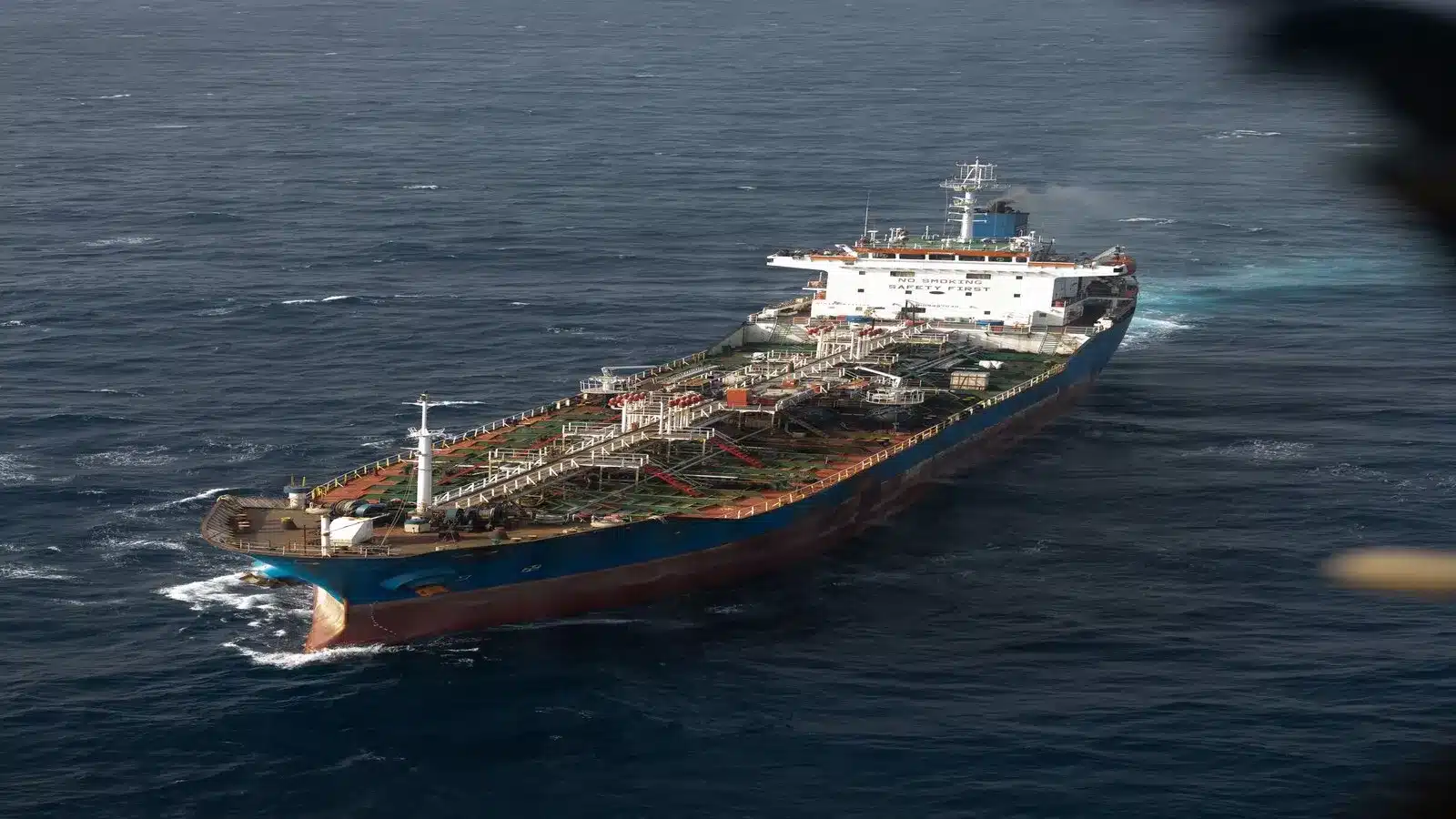
CENTCOM also confirmed that on May 29, 2026, United States forces disabled the Gambia‑flagged M/V Lian Star after the vessel attempted to run the blockade. The ship reportedly ignored multiple warnings before US forces fired into its engine room, marking the fifth vessel disabled since April 13, 2026, and the 116th redirected. ISW included the incident in its May 30, 2026 update because it occurred after the previous day’s reporting cutoff and reflects continued US enforcement activity in the waterway.
