
Strait of Hormuz Tensions Rise Under U.S. Blockade as Diplomacy Moves Forward
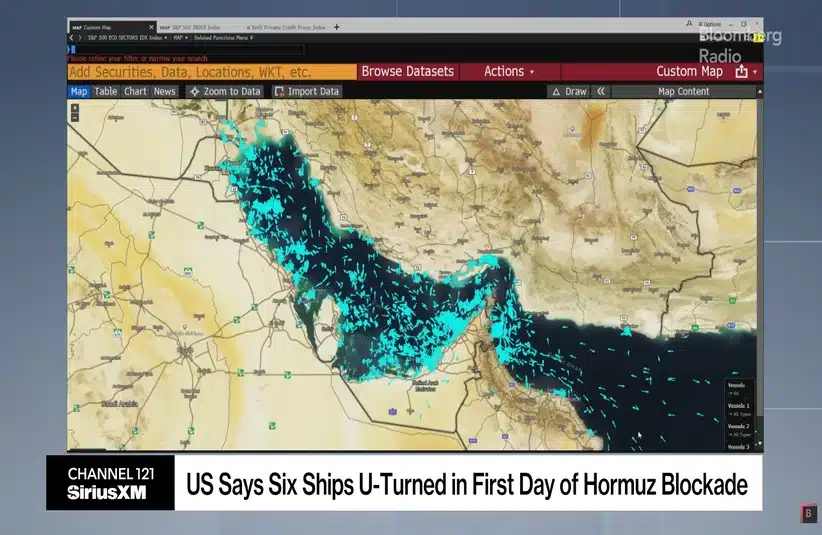
Following the events of Monday’s Strait of Hormuz blockade by the United States, starting April 13, 2026, with China saying its ships would continue to honor their trade and energy ties with Iran, irrespective of what President Trump had to say on the matter. Tuesday morning saw the Times of Israel report that a Chinese tanker, Rich Starry, was sanctioned, but passed through the blockade chokepoint.
Rich Starry was the first to exit the Gulf since the blockade was enforced on Monday, April 13, 2026, at 10 a.m. It is a medium-range ship carrying approximately 250k barrels of methanol, according to released data. It had obtained the cargo in the United Arab Emirates, its last known port of call. The tanker, owned by Shanghai Xuanrun Shipping Co Ltd, had been sanctioned for dealing with Iran.
Strait of Hormuz Blockade Faces Early Challenges
Tuesday was the first full test of the U.S. blockade in the Strait of Hormuz. The National reports there were many ships that slipped through. As the blockade came into effect on Monday, April 13, 2026, at 10 a.m., they saw Rich Starry make its way once more toward the Strait of Hormuz Wednesday. What they didn’t see was the invisible traffic of four Iranian ships, the Rayan, Daisy, Kashan and Golbon.
Their movements went through the Strait of Hormuz using Iran’s territorial waters after the blockade was put in place on Monday. The National says that satellite data from the London Stock Exchange Group (LSEG) revealed to them that ships were moving while the U.S Navy sat waiting. It also showed non-Iranian Liquefied Petroleum Gas (LPG) carriers under Malta and Panama, successfully traveled the Strait on Wednesday, challenging Admiral Cooper’s claim that the region’s sea trade had been completely stopped, according to the U.S. military
U.S. Blockade Shows Mixed Results in First Days
While some ships may have escaped the blockade, the U.S. did intercept two tankers looking to leave Chabahar port in Iran on Tuesday, The National reported, according to Reuters. Another tanker, under U.S. sanctions, Rich Starry, had come to the Strait of Hormuz again on Wednesday, after it had exited from the Arabian Gulf previously. By Wednesday, April 15, 2026, Commander Admiral Brad Cooper claimed that U.S. forces had created a standstill in economic trade, cutting Iran off from sending or receiving. The Strait of Hormuz has since been declared open to commercial traffic during the ongoing ceasefire, even as the U.S. blockade remains in place.
The total force of the blockade includes more than 10,000 personnel with over a dozen warships and multiple dozens of aircraft. Central Command reported that no ships from Iranian ports reached the blockade in the first 24 hours. They allowed six merchant ships that complied with the U.S. forces to turn around. The war’s growing tensions have led to global companies such as Hapag-Lloyd and Maersk to stop operations in the Strait as they monitor the situation. The crew’s safety is their top concern at this time.
Israel and Lebanon Hold Rare Talks in Washington
As the blockade was struggling, so too were the two Ambassadors from Lebanon and Israel as they finally met in Washington DC. Israeli Ambassador Yechiel Leiter and Lebanese Ambassador Nada Hamadeh Moawad sat down for face-to-face negotiations as Secretary of State Marco Rubio was present for mediation between the two. This sit-down didn’t last long, just over two hours, according to the Times of Israel.
While there hasn’t been talk of another meeting, Leiter seemed enthusiastic about how things went and expects to come back to the table in the coming weeks. The result of the meeting led to the U.S., Israel, and Lebanon issuing a joint statement, calling their meeting a productive discussion aimed at direct negotiations. While this doesn’t sound like the start of peace, it may be the first step forward.
The statement iterated that the U.S. commended the two countries and supports future talks, with hope regarding Lebanon’s plan to remove threatening influences from their ranks. Seeking to expand on the 2024 agreement for an actual peaceful resolution in Lebanon, a reference to the failed Biden agreement, where the goals weren’t met.
Hezbollah, who were opposed to the talks on Tuesday, responded by bombarding Israel as it began. Sirens across Galilee were sounding as they were attacked. The U.S. expressed support for the right of Israel to defend itself against the attacks levied against it by Hezbollah, stressing that a ceasefire must be the result of talks between the two countries. Per the joint statement, “All sides agreed to launch direct negotiations at a mutually agreed time and venue.”
