
Barney Frank, Progressive Icon, Urges Democrats to Change Strategy
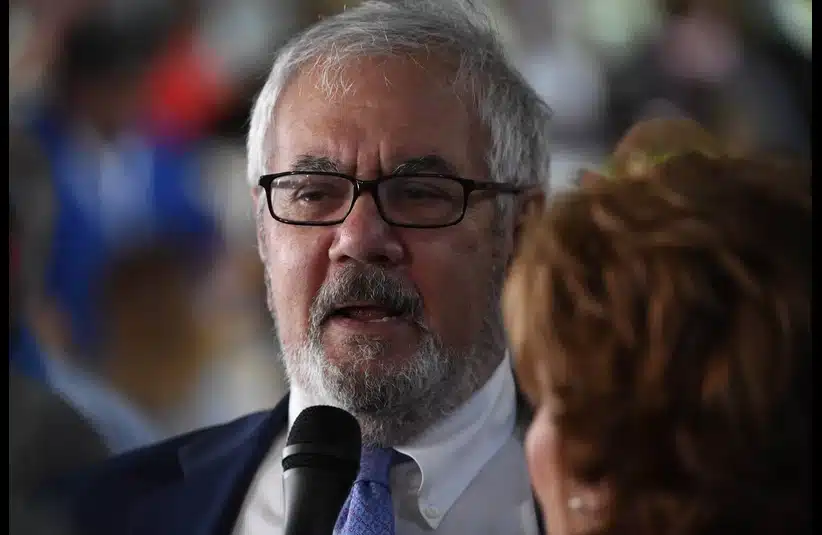
Former Rep. Barney Frank (D-Mass.), who is in hospice care with congestive heart failure, spoke out and had a message for President Donald Trump and the Democrats, whom he believes are going too far left. He made his statement in an interview on CNN’s “State of the Union” on Sunday. Frank offered his remarks as a broader warning about the party’s political strategy and messaging.
Frank’s Message to Democrats
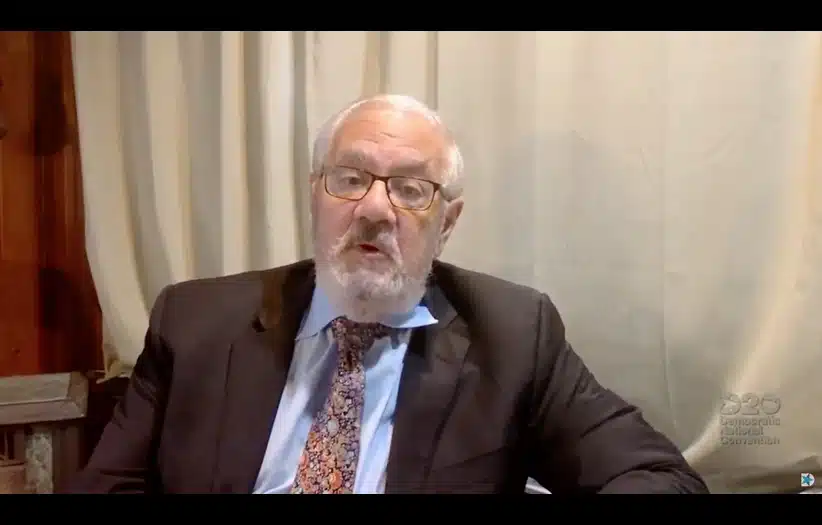
During a deeply poignant Sunday appearance on CNN’s “State of the Union,” Frank made it clear that while he is in hospice, his political instincts remain as sharp as ever. And his assessment of the current political landscape is a stark wake-up call for Democrats who are steering the party toward the ideological fringes. He firmly believes that Democrats are making a massive strategic error by transforming highly controversial social and cultural issues into rigid litmus tests for the party.
Reflecting on his tenure in the House of Representatives from 1981 to 2013, Frank acknowledged that the Democratic mainstream had regrettably ignored economic inequality for far too long. However, as progressive lawmakers finally succeeded in bringing those crucial economic issues to the forefront. However, he noted what he described as a troubling side effect of that shift.
He said, per NJ.com, “I think we’re in a situation where the mainstream, to my disappointment, for many years ignored inequality.” He added, “And many of us fought to get inequality on the Democratic agenda. But the problem was, as we succeeded in bringing the mainstream of the left into a concern with inequality, we also enabled people who wanted to use that as a platform for a wide range of social and cultural changes, some of which the public isn’t ready for.”
The movement essentially handed a megaphone to activists pushing for sweeping social changes—changes that, according to Frank, the broader American public simply is not prepared to digest. For Frank, now in hospice care, the frustration is palpable. He sees a party that risks alienating the very working-class voters it was built to protect by demanding total conformity on every emerging cultural debate.
Related Politics News
- Mississippi Redistricting Fight: Supreme Court Ruling Forces New District Map Debate – Total Apex Herald
- NYC Politics: Council Speaker Julie Menin Increases Pressure on Mayor Zohran Mamdani – Total Apex Herald
Winning the Long Game: Lessons for Democrats
If anyone understands how to navigate the brutal realities of American culture wars, it is Barney Frank. As the first member of Congress to voluntarily come out as gay, he was instrumental in the agonizing, decades-long fight for same-sex marriage. Frank reminded viewers that the victory for marriage equality was not won overnight, nor was it achieved by demanding immediate, radical shifts.
He pointed out that advocates deliberately fought for issues that the general public found “more acceptable” first. They methodically built consensus. Frank told Politico, “It’s one thing to advocate something knowing that you’re going beyond the current viewpoints, and another to make it a litmus test.” Frank is urging Democrats to apply that same granular, strategic thinking to the modern fight for transgender rights.
He offered a remarkably candid piece of advice: Democrats should not hurl accusations of homophobia or transphobia at voters who express discomfort with transgender women competing in women’s sports. Empathy, he suggests, must flow in both directions if the party hopes to build a sustainable, winning coalition.
A Demand for Courage Among Mainstream Democrats
This sharp critique arrives just ahead of Frank’s forthcoming book, “The Hard Path to Unity: Why We Must Reform the Left to Rescue Democracy,” slated for a September release. The book serves as his final political testament, designed to combat the alarming rise of xenophobic populism. But Frank’s most direct challenge is aimed at moderate Democrats currently serving in government.
In recent interviews, he expressed hope that his final written words would inject a dose of courage into colleagues who privately agree with him but are terrified of the progressive backlash. He highlighted toxic political slogans like “defund the police” and demands for “open borders.” For too many Democrats, Frank argues, the strategy has been to simply remain silent and hope the controversy blows over. Frank insists that silence is no longer a viable option. He argues that mainstream Democrats explicitly repudiate these extreme positions to regain the trust of the American electorate.
Trump, the 2026 Midterms, and a Final Regret
Even in hospice, Frank has not lost his fighting spirit when it comes to his political adversaries. While he is deeply concerned about the trajectory of Democrats, he holds nothing back when assessing Donald Trump. Frank also confessed in the Politico interview that one of his greatest regrets about dying is that he will not live to witness what he calls the “continued implosion” of President Trump.
In his interview with CNN’s “State of the Union,” he described Trump as a man who possesses a singular, destructive talent for exploiting human anger, while remaining thoroughly incompetent at the actual job of governing. As Democrats look toward the 2026 midterm elections, they currently hold a slight edge over Republicans in the polls, yet they still struggle significantly with overall favorability. Frank’s plea is a roadmap to fix that deficit. It is a reminder that to address right-wing populism, Democrats must first focus on resolving internal party issues.
