
Trump Signs Bill Ending Partial Government Shutdown 2026
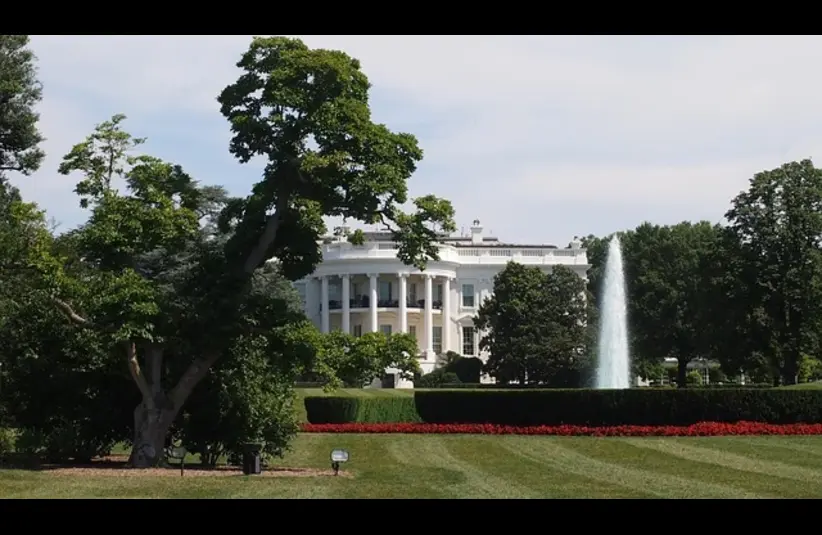
In Washington on Tuesday, President Donald Trump signed into law a huge funding package to end the partial government shutdown that began over the weekend.
Early on Tuesday, the massive bill was passed by the House on a tight vote of 217-214 to stop the shutdown. In addition, the bill passed the Senate last week. Thanks to the legislation, the federal government is ensured full-year funding through the end of September, with the lone exception of the Department of Homeland Security (DHS), which is put on a two-week tightrope as Democrats ferociously insist on changes after federal agents fatally shot two Americans in Minneapolis, Minnesota.
Trump Signs Bill to End Partial Government Shutdown
The measure to end the shutdown intensifies a frantic 10-day window for Congress to get a negotiation for a DHS funding agreement as Democrats call for reforms in Immigration and Customs Enforcement (ICE) and Border Protection (CBP). Friday, Feb. 13, is the new deadline when funding for DHS expires. House Republicans voted in a close 217-215 to advance the legislation, a procedural motion for which Democrats didn’t provide help.
Related Content on Politics
- Ohio Congressional Race Heats Up, Former ICE Deputy Director Trades Handcuffs for Campaign Handshakes – Total Apex Herald
- Ilhan Omar Removed from ICE Facility: Breaking News
- Hoyer Announces Retirement Ending LoCareer
What Else to Know About the Shutdown Ending
A vote on the bill did have a one-day delay after the Democrats privately insinuated that they wouldn’t grant the number of votes needed speed up the shutdown-ending bill on Monday. Rep. John Rose, R-Tenn., joined Rep. Thomas Massie, R-Ky., in voting against the bill, albeit unexpectedly. The procedural “rule” vote turned into a tense moment for House Republicans.
The margin narrowed down to a single vote, and the tally was open longer than usual due to the unexpected agreement on Massie and Rose voting against the bill. Massie, an opponent of spending measures, was widely seen as immovable. Rose, who has been on the Senate’s case for not doing enough to move the SAVE Act, would require proof of citizenship to vote, ultimately changed his vote on the bill to “yes.”
What Has Been Said About The End of the Shutdown?
On X (formerly Twitter), Rose said, “It’s one thing to say you support the SAVE Act, it’s another to attach it to must-pass legislation that can pass. And frankly, I don’t trust Mitch McConnell and John Thune, who are suddenly assuring House Republicans they’ll pass the SAVE Act if we shut up and fund the government via their Senate bill. The SAVE Act has sat in the GOP-controlled Senate for over 300 days.”
He also added, “If they ignored it then, why believe they’ll act after we fold? 83% of Americans want proof of citizenship to vote, including 71% of Democrats. This vital election integrity bill belongs on must-pass legislation.” The spending package includes language ensuring back pay to federal employees who were briefly affected during the partial shutdown.
The Office of Personnel Management recently made updates to its shutdown guidance to remove any references to guaranteed backpay for furloughed federal workers when the funding lapse comes to an end. In the statement obtained by Federal News Network, the OPM stated, “Congress will determine via legislation whether furloughed employees receive pay for furlough periods.”
The guidance also stated, “Agencies should provide direction to their employees on resumption of operations and reporting expectations.” Rep. Rosa DeLauro, D-Conn., the party’s negotiating lead in the House, voted for the bill. However, the House Minority Leader Hakeem Jeffries, D-N.Y., and Minority Whip Katherine Clark, D-Mass., voted to oppose the bill.
In a statement obtained by NBC News, DeLauro said, “I believe this is an opportunity to isolate DHS and go at it, hammer and tongs, tooth and nail — whatever phrase you want to use — rather than having to figure out what the heck is going to happen to five other bills and all those departments. There’s unbelievable bipartisan, bicameral support on those bills. So why squander that? And then take the next 10 days, next Friday, and just bring DHS up.”
What The Bill Means For DHS
A short-term pause on DHS funding — tacked onto other spending measures for two weeks — came out of talks between Senate Minority Leader Chuck Schumer and the White House after public outrage over the killings of Renee Good and Alex Pretti. House Speaker Mike Johnson said the administration has been negotiating “in good faith” with Senate Democrats on a full-year DHS bill and urged continued cooperation over the next 10 days.
He also pressed governors and mayors in Democratic-led jurisdictions to work with federal law enforcement as officials try to restore calm in Minnesota. The Senate approved the package 71–29 last Friday, and the president urged House Republicans to accept it without changes, undercutting calls from some in the party for revisions. Still, lawmakers warn a bipartisan DHS deal will be hard to reach. Rep. Robert Aderholt, a senior Appropriations member, called an on-time agreement “very difficult” and said differences are wide enough that another short extension — possibly until March 1 — seems likely.
