
Trump Scores Court Win As Judge Refuses To Halt Mail Ballot Order
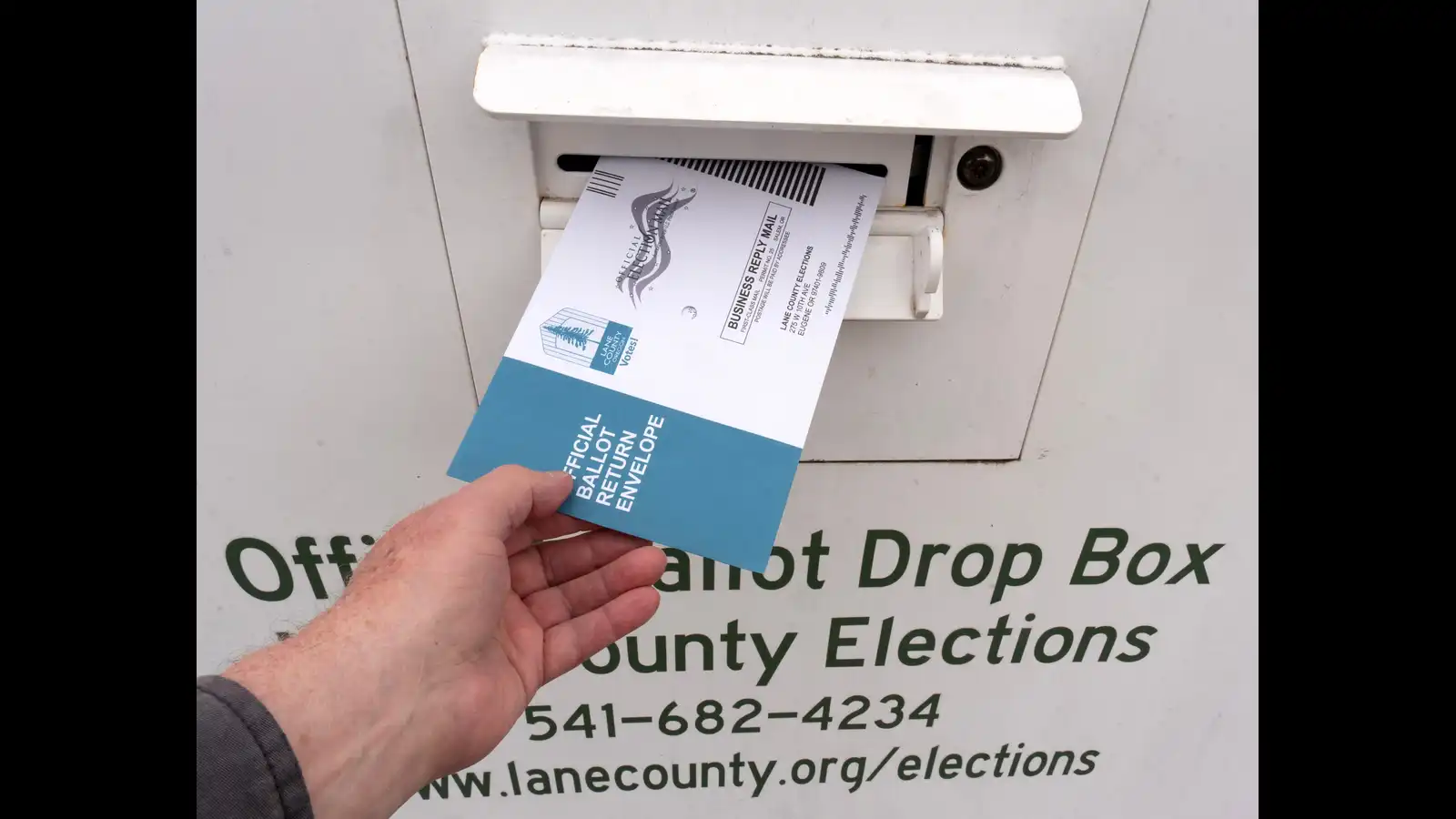
A federal judge on Thursday declined to temporarily block President Donald Trump’s executive order targeting mail-in voting, handing Democrats and voting rights groups an early legal setback while leaving the broader constitutional fight unresolved.
According to AP News, U.S. District Judge Carl Nichols, a Trump appointee based in Washington, D.C., ruled that challenges to the order were premature because federal agencies have not yet implemented the policy in a way that directly harms voters or states. The decision allows the order to remain in place for now, though the judge made clear future lawsuits could still succeed once implementation begins.
“Given that the Executive Order does not command Plaintiffs to do anything, and that no agency has yet acted pursuant to the Order in a way that could harm Plaintiffs, they have not suffered any harm at present,” Nichols wrote in the ruling. That wording matters. The court did not endorse Trump’s order as constitutional. Instead, Nichols essentially concluded the legal challenge arrived too early. In other words, the courtroom battle appears paused, not finished.
Trump’s Executive Order Targets Mail Ballots

Trump signed the executive order on March 31, framing it as an effort to strengthen election security and enforce existing federal voting laws. The order directs the Department of Homeland Security to work with the Social Security Administration to create lists of adult U.S. citizens in each state. Under the directive, those citizenship lists would then be shared with state election officials and potentially used by the U.S. Postal Service to determine which voters can receive mail ballots.
The order also calls on USPS to develop procedures limiting the delivery of mail ballots to individuals appearing on those federal lists. That provision quickly triggered alarm among Democrats and voting rights advocates, who argue the federal government is moving into territory traditionally controlled by states and Congress.
Critics also questioned whether USPS, an independent federal agency, even has the legal authority to create election-related mailing rules on that scale. The administration, however, argues that the executive branch has a constitutional duty to enforce federal election laws under Article II.
Trump has repeatedly claimed mail voting is vulnerable to fraud, despite election officials and multiple studies consistently finding widespread voter fraud to be rare. Notably, Trump himself has voted by mail in Florida.
Judge Says Harm Is Still ‘Speculative’
Nichols acknowledged concerns raised by the plaintiffs but said the feared consequences remain hypothetical because agencies are still determining how to implement the order.
“The Court recognizes that the Postal Service may ultimately issue a final rule that directly affects Plaintiffs or their members, or that the Government may develop State Citizenship Lists that omit specific individuals due to particularized flaws,” Nichols wrote.
“Plaintiffs may, of course, renew their motions if and when those future actions occur.”
That section of the ruling may become the legal roadmap for future challenges. Democrats and voting rights organizations are expected to continue monitoring how federal agencies carry out the order, especially as election deadlines approach later this year.
The administration previously stated in court filings that agencies were still deliberating implementation details. According to Reuters, as of Thursday, USPS had not publicly announced a formal rulemaking process tied to the executive order.
Democrats Warn Of Voter Suppression
Democrats reacted sharply to the ruling, arguing the order could disenfranchise eligible voters if citizenship databases contain errors or outdated information. One of the largest concerns centers on Social Security Administration data, which challengers claim may incorrectly exclude legitimate voters. The executive order does include procedures allowing states and individuals to correct inaccurate records, but critics argue errors could still create significant problems close to elections.
Senate Democratic leader Chuck Schumer called the order “voter suppression, plain and simple” in a statement following the ruling. Voting rights groups also argued that Article I of the Constitution gives states and Congress, not the president, authority over federal election rules. Nearly two dozen states, along with Washington, D.C., have joined lawsuits challenging the order. Meanwhile, another federal judge in Boston is expected to issue a separate ruling in related lawsuits as early as June.
Trump’s Order Reignites The Mail Voting Debate
The broader political backdrop is difficult to ignore. Mail voting became deeply polarized after the 2020 election cycle, even though voters from both major parties continue to use absentee and mail ballots in large numbers. Democrats, however, tend to rely on mail voting at higher rates than Republicans. That reality has turned what was once mostly administrative election policy into one of the country’s most persistent political flashpoints.
Additional News From Total Apex Herald
- DOJ Removes Jan. 6 Case Pages, Calls Material ‘Partisan Propaganda’ Amid Controversial Policy Shift
- ICE Denies New Jersey Gov. Mikie Sherrill From Entering the ICE Detention Facility
FAQ
Did the judge rule Trump’s executive order constitutional?
No. Judge Carl Nichols only ruled that it was too early to block the order because it has not yet been fully implemented.
What does Trump’s executive order do?
The order directs federal agencies to create citizenship lists and potentially limit mail ballot delivery to voters appearing on those lists.
Why are Democrats opposing the order?
Critics argue the order could disenfranchise eligible voters and exceeds presidential authority over elections.
Can the lawsuits continue?
Yes. The judge specifically said plaintiffs can renew their legal challenges once the government begins implementing the order.
