
Saturn’s Shocking Spin Lie Crumbles in 2026

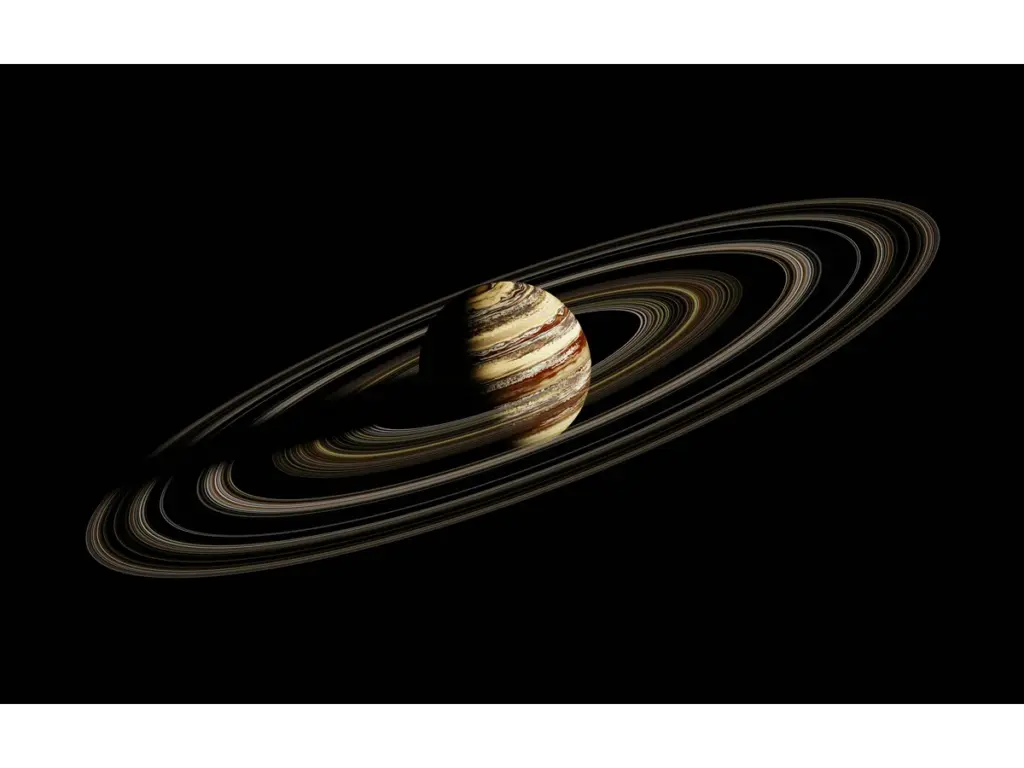
Saturn has been tricking scientists for decades with rotation measurements that never quite added up. The giant ringed planet appeared to speed up and slow down over time, even though planets do not simply change their spin rate on a whim. Now, observations from the James Webb Space Telescope have revealed the real culprit: Saturn’s spectacular auroras.
Auroras Are the Real Tricksters
NASA’s Cassini spacecraft first spotted this odd behavior back in 2004, leaving astronomers scratching their heads. A 2021 study suggested the problem was not Saturn’s actual spin but rather false signals from high-altitude winds that skewed the measurements. The new James Webb Space Telescope observations finally caught the culprit red-handed, and it turns out Saturn’s beautiful northern lights are to blame.
Those shimmering light shows dump energy into the planet’s upper atmosphere, heating things up like a cosmic space heater. That heating creates strong winds, which then generate electrical currents flowing through the air. What happens when those currents loop back around and power the very aurora that started the whole mess? Scientists call this process a planetary heat pump. The system feeds on itself indefinitely, making Saturn appear to change its rotation when viewed through certain instruments.
Mapping a Gas Giant’s Mood Swings
The research team pointed JWST at Saturn’s northern auroral zone for an entire Saturnian day, which lasts about ten and a half Earth hours. They looked for infrared light coming from a molecule called trihydrogen cation, a fancy name for a very useful temperature checker. Earlier measurements produced significantly different temperature estimates.
JWST’s new data were ten times more accurate, allowing scientists to see tiny hot and cold patches for the first time. Those patterns matched computer models from over a decade ago, but only if the heating source sat exactly where auroral particles crash into the atmosphere.
What This Means for Regular People
For folks who do not spend their nights staring at telescope data, this discovery matters more than you might think. It shows that a planet’s atmosphere and its surrounding magnetic bubble, called the magnetosphere, talk to each other constantly in ways scientists did not fully appreciate. Similar measurement distortions may exist on other worlds, which means our understanding of Jupiter, Uranus and Neptune could be equally flawed.
This research suggests that planetary scientists may need to reexamine decades-old data with fresh eyes, looking for aurora-driven tricks everywhere. The same kind of heat pump could be operating on gas giants far outside our solar system, meaning alien weather patterns might behave in ways no one has predicted yet.
Your Daily Life Stays the Same, But Space Gets Cooler
On a practical level, nobody needs to worry about Saturn messing up their morning commute or ruining their horoscope. The discovery will not change how satellites orbit Earth or affect GPS signals or weather forecasts for your weekend barbecue. However, it does give space enthusiasts a fantastic new fact to drop at parties when conversations get boring.
Could understanding these planetary heat pumps someday help scientists predict space weather that affects astronauts or expensive robots near other planets? That possibility exists because aurora-driven currents can hurl energetic particles across vast distances. For now, just enjoy knowing that Saturn has been fooling astronomers about its spin speed for decades, and only a very expensive space telescope finally uncovered why. Not bad for a planet with a funny-looking hat made of ice chunks.
Additional News from Total Apex Herald
- Arctic Ocean Losing Critical Nutrient as Climate Change Threatens Marine Food Web
- FIFA’s World Cup Dreams ICE-Cold Reality as Strike Threat Looms
Follow David Gilbert for Entertainment, Gaming, and Current Affairs Coverage
Stay connected with David Gilbert for the latest updates on entertainment, gaming, technology, science, and current affairs.
You can also explore more of David Gilbert’s reporting and analysis across Total Apex Entertainment and Total Apex Herald.
