
Public Pushback: Flock Safety Tech Cameras Are Being Denied And Rejected
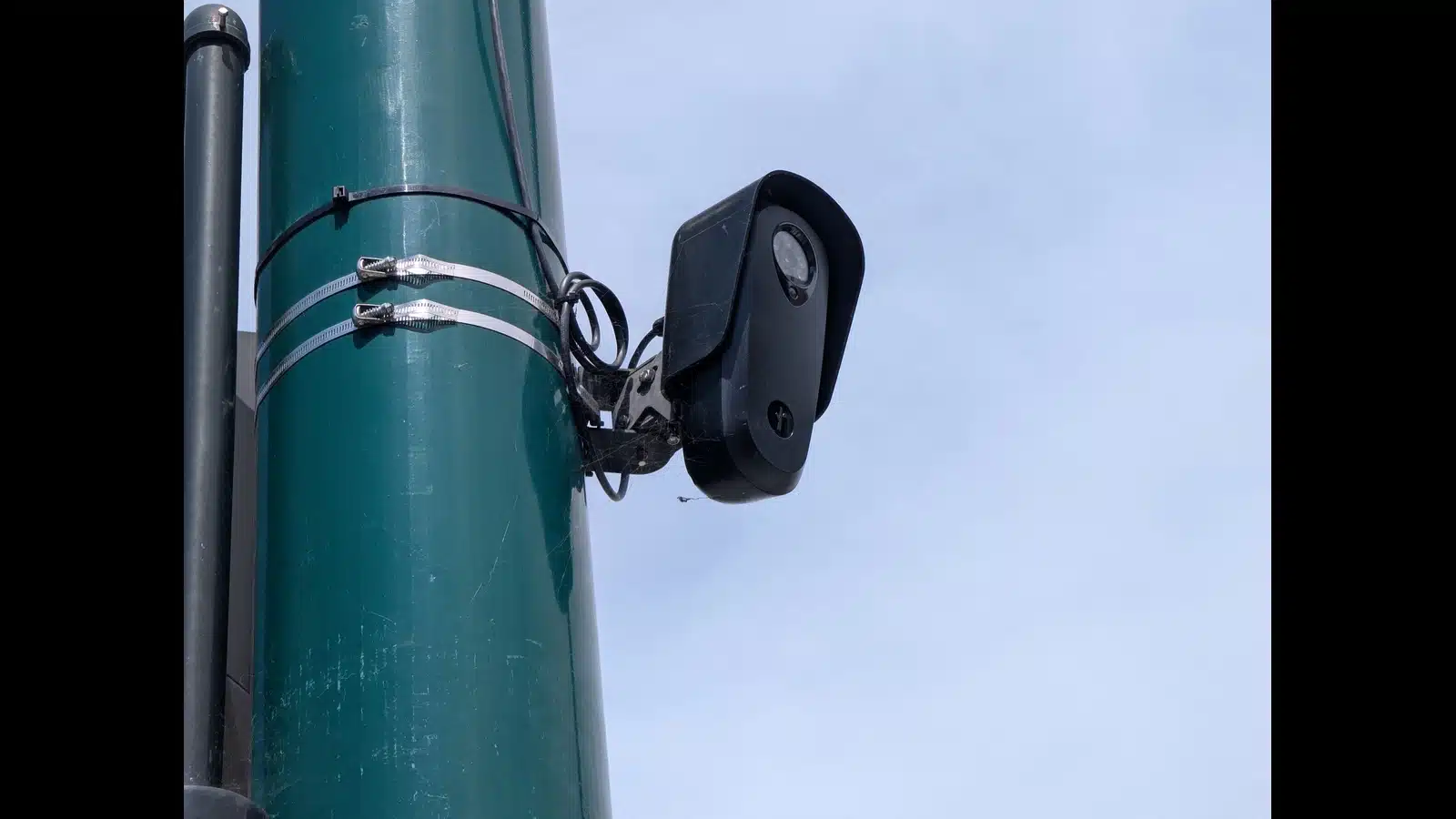
Flock Safety’s story didn’t begin in the limelight, but the company’s reach has grown far beyond the neighborhoods it first set out to protect. As its technology moved from homeowners association gates to police departments, the conversation around what these cameras actually mean for the public shifted right along with it. Now the debate sits at a breaking point, with more cities and residents openly questioning whether the trade‑off between security and privacy has gone too far.
Flock Safety: Where It Began
What began as a tool for Homeowner Associations in 2017, seeking to lower crime in gated communities, has blossomed into a tool for law enforcement across the United States. Flock Safety’s website boasts its constantly evolving, future-proof technology that helps law enforcement tackle crime in real time. The technology behind Flock cameras comes from three key patents filed in the United States by two of the co-founders, Matt Feury, the Chief Technology Officer, and Garrett Langley, Chief Executive Officer, with Paige Todd being the third co-founder of Flock Group Incorporated.
Three patents create the framework that Flock is so proud to share with agencies across the United States. US 11,030,892 B1 detects motion and stores metadata in a compressed state, a feature that allows the cameras to run efficiently on solar power without draining the battery. US 11,416,545 B1 utilizes machine learning to search for specific vehicle attributes: make, model, color, and license plate, across a vast data library. US 12,322,186 B1 allows for precise, clean, readable images for identification by using infrared technology to capture clear images even in harsh conditions.
However, Flock’s success may have a price tag that citizens are unwilling to pay.
Neighborhood Security: Safety or Privacy
CNET reported in 2018 that Flock’s security cameras were used in many neighborhoods and were present in 13 states. According to the article, they were outdoor security cameras that ran on solar power, internal batteries, and long-term evolution (LTE) cellular networks, supplied to homeowners associations and neighborhood groups. There would be multiple cameras spread throughout neighborhoods, with each subdivision managing footage and working alongside police if crimes were to be recorded.
CNET asked co-founder Langley whether community privacy was a point of concern. His response was revealing: while neighborhoods raise privacy concerns, none had walked away from Flock because of it, suggesting their technology resolved those concerns. According to his statements, most neighborhoods in 2018 lacked security cameras due to cost, with CNET noting that Flock charged $1,500 per camera annually to cover installation and maintenance.
CNET noted there were other options for security surveillance and safety; Flock was the only one with what appeared to be a reasonable price point that was comparable to higher-end systems police used. While there may not have been strong concern in 2018, it is clear that those attitudes shifted since then.
Flock Contracts: Contract Denied
According to Futurism, Flock Safety’s automatic license plate reader contracts are not being renewed, citing 54 cities throughout the country voting against them based on reporting from the Washington Examiner. The Washington Examiner highlighted the speed of this shift; the figures show a sharp rise from 2025, when roughly 30 cities had turned Flock away, effectively doubling the rate of contract rejections in a matter of months.
California and Wisconsin are spearheading the momentum with seven contracts either dropped or denied per state. Futurism recorded that Washington, Massachusetts, and New York each had four contracts declined or rescinded, while Virginia had three. Although Flock currently operates in over 5,000 cities across the country as of July 2026, the current wave of rejections underscores growing concerns about infringement of privacy and civil rights.
To highlight citizen concerns, Futurism mentioned Air Force engineer Jeffrey Sovern, who took matters into his own hands and damaged a Flock Safety camera by cutting it down. Another noteworthy mention was a series of cameras that disappeared in Winona, Minnesota, announced in a press release on Facebook. The most significant cancellation of Flock contracts came from the Los Angeles Police Department, which ended its partnership after a two-month period when an internal audit showed 161 false stolen-vehicle alerts, sparking concerns over innocent drivers facing unwarranted traffic stops.
