
Barney Frank Dies at 86: Trailblazing Congressman Leaves Lasting Legacy
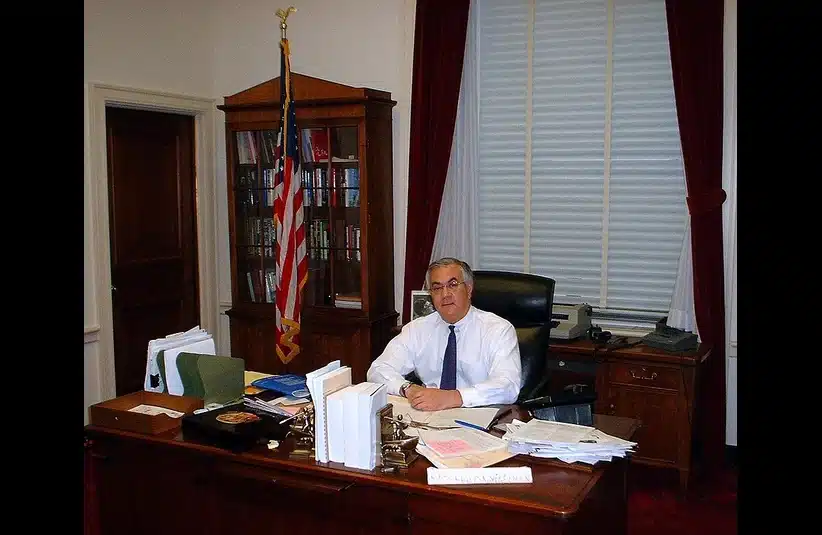
Former Congressman Barney Frank, one of the most influential and polarizing Democratic lawmakers of the modern era, has died at 86 after entering hospice care for congestive heart failure.
Frank died Tuesday at his home in Ogunquit, Maine, according to longtime friend and former campaign manager Jim Segel. The outspoken Massachusetts Democrat served in Congress from 1981 to 2013 and became one of the defining political voices of his generation through his sharp wit, unapologetic liberalism, and major role in reshaping financial regulation after the 2008 economic collapse.
For many Americans, Frank’s name became synonymous with the landmark Dodd-Frank financial reform law. For others, he represented something even bigger: a turning point for LGBTQ representation in national politics.
Barney Frank Changed American Politics Long Before It Was Common

When Frank publicly acknowledged he was gay in 1987, openly LGBTQ politicians were exceedingly rare in Washington. At the time, most public figures who came out did so only after scandals or public exposure. Frank chose a different path.
“If you ask the direct question ‘Are you gay?’ the answer is yes,” he famously told The Boston Globe before adding, “So what?” That moment carried enormous political risk in the late 1980s. Yet he not only survived politically, but he also continued winning elections comfortably in a district that stretched from affluent Boston suburbs to working-class Massachusetts communities.
His decision helped normalize LGBTQ representation in Congress years before same-sex marriage became legal nationwide. In 2012, Frank became the first sitting member of Congress to marry someone of the same sex when he wed Jim Ready. Frank often described himself as an outsider from the beginning. “I’m a left-handed gay Jew,” he once joked. “I’ve never felt, automatically, a member of any majority.”
The Dodd-Frank Act Became His Defining Legislative Achievement
While the congressman’s personality often dominated headlines, his biggest impact may have come through financial policy. As chairman of the House Financial Services Committee during the 2008 housing crisis, Frank helped craft the Dodd-Frank Wall Street Reform and Consumer Protection Act alongside Senator Christopher Dodd.
Signed into law by President Barack Obama in 2010, the law imposed stricter oversight on major banks and created the Consumer Financial Protection Bureau following the worst financial meltdown since the Great Depression. Supporters viewed the legislation as essential guardrails against reckless banking practices. Critics argued it burdened businesses and financial institutions with excessive regulation.
Even some of his allies acknowledged his complicated relationship with the housing crisis itself. Republicans frequently accused him of failing to recognize warning signs involving mortgage giants Fannie Mae and Freddie Mac before the crash.
Frank later admitted he had underestimated the severity of the problem. “I was late in seeing it, no question,” he told The Boston Globe in 2010. Still, many independent analysts argued that responsibility for the crisis stretched across both political parties and multiple administrations.
Barney Frank Was Famous for His Sharp Tongue
Few lawmakers generated memorable one-liners quite like Frank. He could be brutally funny, especially during congressional hearings or television appearances. Asked by a voter in 2009 why he supported what she called “Nazi policy” in health care reform, Frank shot back: “On what planet do you spend most of your time?”
His remarks regularly went viral before social media became central to politics. Massachusetts Senator Elizabeth Warren remembered him this week as “wicked and wickedly funny” while praising his role in consumer protection reform.
Frank’s style, however, also earned him critics. Colleagues, reporters and even constituents often found him abrasive and impatient. Yet many voters respected his directness and his reputation for delivering results.
A 2011 appraisal from the Taunton Daily Gazette noted that Frank’s constituent service was legendary throughout southeastern Massachusetts. Residents often spoke about how “Barney” personally helped solve problems involving federal agencies and benefits.
Scandal Nearly Ended His Career
Frank’s political survival remains one of the more remarkable comeback stories in modern Congress. In 1989, the House reprimanded him after an ethics investigation found he improperly used congressional influence to assist a male prostitute with whom he had a personal relationship. The scandal dominated headlines and prompted calls for his resignation. Instead, voters sent him back to Congress!
He won reelection in 1990 with 66% of the vote, a sign that many constituents separated his personal mistakes from his work in office. That political resilience foreshadowed a broader shift in American politics, in which personal scandal became less damaging when voters believed elected officials remained effective at their jobs.
Frank’s Final Political Message Focused on Democratic Strategy
Even in hospice care, Frank remained deeply engaged in politics. Before his death, he completed a new book titled “The Hard Path to Unity,” where he argued Democrats risked alienating voters by moving too aggressively on divisive cultural issues.
He specifically warned against turning issues like transgender participation in sports and “Medicare for All” into rigid political litmus tests. Instead, Frank urged Democrats to focus on practical coalition-building and incremental policy victories. It was a fitting final chapter for a politician who spent decades navigating ideological fights while remaining intensely focused on legislative outcomes.
FAQ
Who was Barney Frank?
Barney Frank was a longtime Democratic congressman from Massachusetts who served in the U.S. House of Representatives from 1981 to 2013.
What was Barney Frank known for?
Frank was best known for co-authoring the Dodd-Frank financial reform law and for becoming one of the first openly gay members of Congress.
How did Barney Frank die?
Frank died at age 86 after entering hospice care for congestive heart failure.
What is the Dodd-Frank Act?
The Dodd-Frank Act is a major financial reform law passed in 2010 following the 2008 financial crisis. It increased oversight of banks and created new consumer protections.
Was Barney Frank involved in controversy?
Yes. In 1989, Frank faced an ethics scandal involving misuse of congressional influence connected to a personal relationship. He was reprimanded by the House but remained in office after winning reelection.
