
Solidarity While Gulf Under Fire: Saudi-UAE Coordination Faces 3 Drone Strikes and Hormuz Crisis
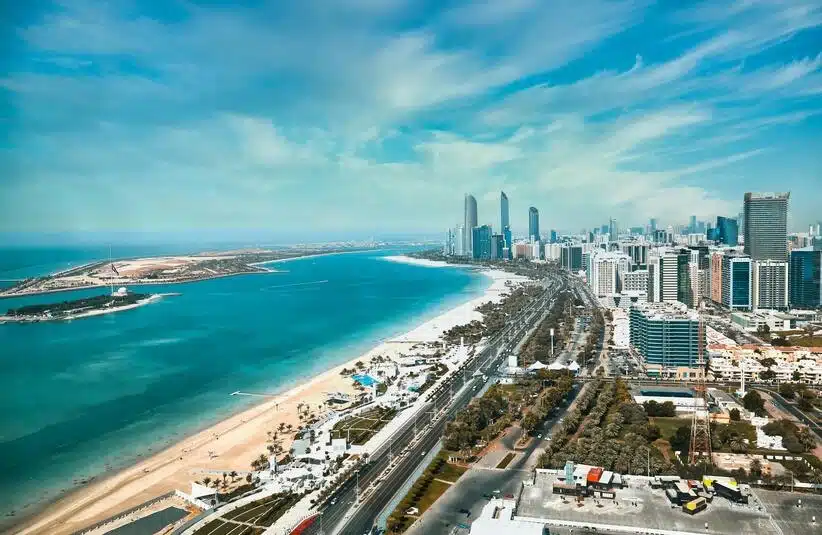
As geopolitical tensions around the Gulf continue to reshape the region, the United Arab Emirates (UAE) has moved aggressively to secure its energy infrastructure. The UAE recently directed the Abu Dhabi National Oil Company (ADNOC) to expedite the construction of a new West-East pipeline to double its export capacity through Fujairah and bypass the volatile Strait of Hormuz. However, while Abu Dhabi focuses heavily on reinforcing its oil supply routes against regional threats, vulnerabilities in its broader critical infrastructure have simultaneously come under fire.
Attacks Against The Gulf: Pointing Fingers
When the United Arab Emirates (UAE) Barakah plant was reportedly struck by drones that started a fire on May 17, 2026, reporting from the Associated Press (AP) through Hawaii Public Radio missed key details. The accuracy of the drone entry, coming from the western border with Saudi Arabia, and Saudi Arabia’s disapproval of the violation of the UAE’s reactor were recorded. Information from the Institute for the Study of War (ISW) shows that Tasnim News may have tried to point the finger at Saudi Arabia.
The Tasnim News Telegram post directing the UAE’s attention to Saudi Arabia came just as the UAE finally announced the direction the drones came from. The post pointed to the fact that Saudi Arabia is to the west of the UAE and noted that, unlike most strikes the UAE has sustained, they did not blame Iran. Tasnim News highlighted the tense and increasingly cold friction growing between Riyadh and Abu Dhabi, hinting that the UAE may seek out Saudi Arabia to take the blame for the drone strike.
The ISW also made a record of a Defa Press message claiming the United States and Israel were attacking members of the Gulf states, in an attempt to blame Iran and extricate itself from the ongoing regional warfare. The Defa Press says Iran condemns the conspiracy presented, a warning to those in the Gulf that a trap was laid for them to fall into and that retaliation would be dangerous. While Tasnim News and Defa Press both sought to redirect blame, the Saudi Defence Ministry posted on X, according to Major General Turki Al-Maliki, they intercepted three drones entering Saudi airspace from Iraq.
Diplomacy: Another Counterproposal Falls Flat
ISW cited a Fars News report on the most recent counterproposal from the United States, highlighting a condensed set of five conditions to Iran’s latest rebuttal of the United States’ demands. The United States’ response rejected Iran’s demand for war reparations, failure to release even 25 percent of Iran’s frozen assets, called for the transfer of 400 kilograms of uranium from Iran to the United States, but would allow Iran to have one set of operating nuclear facilities, while the war itself only comes to an end if success is found in negotiations.
It was noted that even if Iran were to adhere to the conditions, there was no guarantee that attacks against Iran wouldn’t happen in the future from the United States or Israel.
Fars News contends that the proposal isn’t trying to resolve anything, but to achieve what the United States has failed to do since the beginning. Based on statements from the Islamic Revolutionary Guards Corps (IRGC) Baghiyatollah Sociocultural Headquarters Commander Major General Mohammad Ali Jafari on May 11, 2026, the United States’ proposal will likely be dismissed based on a failure to meet Iran’s terms.
President Donald Trump posted on Truth Social on May 18, 2026, that he was cancelling a military strike on Iran initially planned for May 19, 2026. The ISW reported this was after Qatari Emir Sheikh Tamim bin Hamad al Thani, the Saudi Crown Prince Mohammed bin Salman, and Emirati President Mohamed bin Zayed asked President Donald Trump, based on ongoing negotiations, to suspend the pending attack. A United States official and an unnamed source informed Axios that if the United States attacked Iran, those in the Gulf may be the ones who face Iran’s retribution.
The Persian Gulf Strait Authority
A new X account appeared, titled PGSA for the Persian Gulf Strait Authority, labelled as serving Iran’s legal institution for managing passage along the waterway. According to the ISW, an Irib News Telegram reported that some 1,500 ships were awaiting authorisation to pass through the waterway. However, the ISW cited the UN Charter on the Law of the Sea (UNCLOS) articles 37, 38, and 44, which strictly guarantee the right of unimpeded transit for international navigation. The PSGA went a step further by stating that moving through the area required coordination with the authority; any transit without coordinating first is illegal.
Fars News reported that after management is established in the Strait, under the 1982 UNCLOS, Iran can choose to declare absolute sovereignty. ISW cited Fars News Agency reporting Iran’s newly asserted authority over the Strait could allow it to enforce permits and oversight measures, including sovereign fees, on fiber-optic cables throughout the waterway after establishing a regulatory process. Fars further warned that disruptions along the waterway could result in hundreds of millions of dollars in direct and indirect damage to the regional economy.
United States Central Command (CENTCOM) announced United States forces redirected 4 commercial vessels between 10 a.m. on May 17 and 1 p.m. on May 18, for a total of 85 ships redirected and four disabled since April 13.
