
Iran Asserts Bold Control Over the Strait of Hormuz as Global Powers Navigate Selective Passages and Escalating Tensions
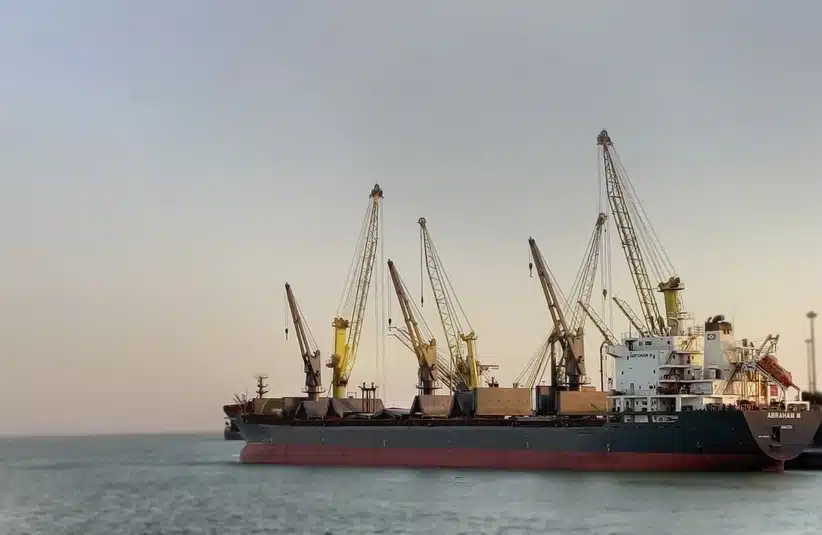
The Strait became a focal point for the globe when it was closed on Feb. 28, 2026. With things constantly escalating, Iran declaring ownership over the Strait, the formation of the Persian Gulf Strait Authority, and the enactment of Iran’s Vessel Information Declaration, things have only gotten worse with time. Operational reports showed vessel seizures and some ships sinking.
Recent Institute for the Study of War (ISW) updates highlight continued Iranian drills and allied naval reinforcements. Key military and diplomatic developments and escalating incidents underscore the fragile ceasefire and persistent tensions over navigating the waterway.
Smooth Sailing: A New Path Forward
On May 14, 2026, Japanese Prime Minister Sanae Takaichi announced she had negotiated with Iran for the safe passage of a Japanese oil tanker through the waterway without a toll. Reporting from the ISW highlighted that Iranian state media previously released a statement from Iran’s Foreign Minister Abbas Araghchi saying the Strait wasn’t fully closed, but would allow passage of ships belonging to friendly nations. There were 5 named in the release: Iraq, Pakistan, People’s Republic of China (PRC), Russia, and India.
Of note, through Farsna’s Telegram channel, they announced that at least six Chinese oil tankers safely transited; it was unclear if they paid a toll. The ISW found a statement from the PRC to the UN in April of 2026, stating that the sovereignty, security, and territorial integrity of Gulf States are to be respected, with civilians and non-military targets given protection. PRC directly rejected Iran’s attacks and blockade of the waterway, saying it hopes that peace, stability, and navigation of the Strait will be restored.
Reporting from ISW cited Reuters, which recorded that as of May 15, 2026, Malaysia received a total of seven ships through the waterway after the Malaysian government obtained permission from Iran.
Strait of Hormuz Events: Explained
The United Kingdom Maritime Trade Operations (UKMTO) reported on Iranian forces seizing the Honduras-flagged Hui Chuan, the anchored ship 38 nautical miles northeast of Fujairah, United Arab Emirates, before moving it to Iranian territorial waters. The ISW recorded a statement attributed to Araghchi on May 14, 2026, that Iran considers the Strait of Hormuz open but asserts that ships must cooperate with Iranian naval forces.
Iran’s Path Forward: Control of the Waterway
Tasnim News made a post on its official Telegram channel, which the ISW cited, where Islamic Revolutionary Guard Corps (IRGC) Baghiyatollah Sociocultural Headquarters Commander Major General Mohammad Ali Jafari said that Iran will refuse negotiations with the United States unless it can satisfy Iranian confidence-building measures. The ISW noted statements made by President Donald Trump reported by Fox News, asserting that China would not provide military equipment to Iran while assisting to bring the conflict to an end after their meeting in Beijing.
The PRC has not made any commitment to support the United States efforts to secure free transit through the Strait of Hormuz; instead, at the press conference, statements regarding the summit downplayed discussions and reiterated the known stance on the issue. The ISW cited reporting from the Financial Times that diplomats revealed that Saudi Arabia may be considering a pact of non-aggression between Middle Eastern states and Iran. This was part of a discussion with its allies on managing regional tensions after the war ends. The ISW notes that the extent of progress of any pact is uncertain; Iran has carried out repeated attacks on Gulf states under the claim of targeting United States military assets.
Diplomacy With China: Rebuilding Relations
The Associated Press (AP) reported that President Trump’s visit was coming to a close as May 14, 2026, was becoming night. While relations between the United States and China were looking up, difficulties surrounded Taiwan, the war in the Middle East, and trade complications. It was hinted at that China could be purchasing oil from the United States, sending Chinese ships to Texas, Louisiana, and Alaska. During his interview with Fox News, President Donald Trump said Iranian officials agreed to let the United States collect buried enriched uranium under their nuclear sites, but then backed out.
China’s Foreign Ministry said President Donald Trump’s meetings with Xi Jinping helped build mutual understanding, a deepened trust, and strengthened cooperation. The AP reported that the ministry noted the two leaders agreed to address each other’s concerns through improved communication and coordination on regional and international issues. During a bilateral meeting with the United States, China once more called for the reopening of the international waterway, with the ministry offering a four-point proposal from Xi Jinping that mentions upholding national sovereignty and international law. Despite the United States and China agreeing that the Strait of Hormuz needs to reopen, China has shown little to no interest in finding solutions to the war.
German Chancellor Friedrich Merz said he spoke to President Donald Trump over the phone on his way home and agreed that the international waterway needed to reopen, reaffirming the president’s stance on Tehran not being allowed nuclear arms, according to AP.
An Extension Just In Time
After two days of negotiations in Washington, with more due June 2-3, Israel and Lebanon agreed to an extended 45-day ceasefire just before it was set to expire on May 17, 2026. The AP reported that State Department spokesman Tommy Pigott posted to social media that there is hope the discussions will lead to lasting peace between the two countries. Furthermore, each country will, in due time, recognize one another’s sovereignty and establish security along their borders.
