
Israel Redefines Regional Defense Borders After Direct Missile Confrontations With Iran
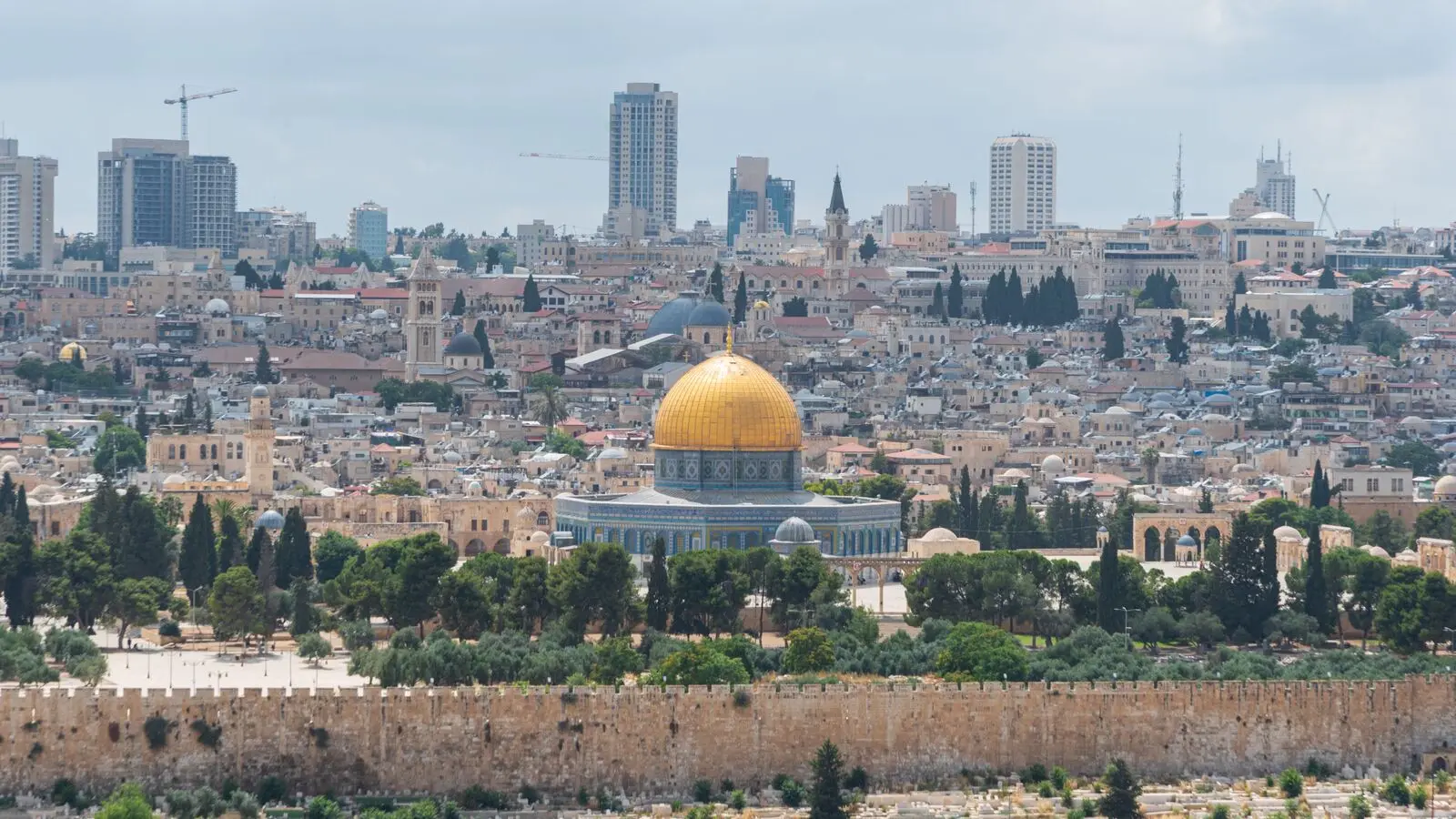
Iran increased pressure across several fronts as negotiations with the United States showed no sign of movement. Financial demands and the response to recent clashes in Lebanon signaled that it intends to hold leverage while talks remain unresolved. Activity in the Strait of Hormuz and continued exchanges between Israel and Hezbollah added new layers to the regional picture. These developments reflected a coordinated effort to maintain pressure during a period of diplomatic uncertainty.
Israel and Iran Exchange Retaliatory Air Operations
The Institute for the Study of War (ISW) recorded messages across X and on the Military Media in the Islamic Resistance of Lebanon (mmirleb) showing that Iran responded to Israeli forces conducting attacks on Hezbollah’s first-person view (FPV) drone headquarters in Beirut with missiles at Israel on June 7, 2026. The Israel Defense Forces (IDF) had conducted the attack in response to Hezbollah strikes on northern Israel; Iran’s missile fire prompted the IDF to return fire, followed by Iran sending a second barrage of missiles.
From a post on X, the ISW cited Expediency Discernment Council Chairman Amoli Larijani on June 8, 2026, stating Iran’s missile retaliation was a declaration of safeguarding regional power, not in defense of military strikes but as an offensive threat. A newspaper affiliated with Iran’s Supreme Leader published on June 7, 2026, that Iran is prepared to fight to defend the regional order it seeks to achieve, framing its posture as an eye-for-an-eye response to military threats.
The ISW noted reports released by NBC News and Times of Israel that President Donald Trump wants negotiations over conflict, while Irib News broadcast statements from the Khatam ol Anbia Central Headquarters stating there would be severe measures if the IDF continues operations against Hezbollah.
Defensive Maneuvers and Tactical Interceptions
ISW noted CNN reporting saying the IDF would continue targeting Hezbollah in southern Lebanon, asserting that attacks on Israel would prompt further strikes on Beirut. The ISW noted IDF updates on X, recording the IDF’s response to Iran striking northern Israel through the IDF targeting Iran’s air defense and ballistic missile sites within central and western Iran. This was accompanied by footage on X posted by the IDF cited by the ISW showing strikes against Iran’s aerial defense warehouses that held missiles for targeting aircraft.
Furthermore, the IDF claimed to have struck ballistic missile production locations in the Bandar Imam Petrochemical Complex in Mahshahr, Khuzestan Province. The ISW acknowledged open-source intelligence (OSINT) and IranInternational posts on X detailing strikes on drone storage and production facilities in Tehran and Esfahan provinces. A Military Correspondent for the Times of Israel posted to X, which the ISW cited, said that the primary salvo of 20 Iranian missiles had been cut off or struck open areas.
Based on reports from Times of Israel and the Saudi Defense Ministry, cited by the ISW, a missile was stopped while a second landed near the Yemeni-Saudi border.
Houthi Forces Target Maritime Corridors
The ISW noted activity through Telegram on a Houthis channel announcing Israeli ships in the Red Sea would be targeted, though no attacks had happened recently. A Houthi source reportedly told Reuters, which the ISW cited, that Israeli vessels being banned in the Red Sea was only the beginning; escalation could result in the Houthis ceasing passage for any headed to Israel alongside other measures. The ISW cited a New York Times report with a senior Houthi official saying the target is Israeli-linked ships but will attack vessels from any state that intervenes.
According to the ISW, Reuters reports showed previously that the Houthis had targeted Israeli-linked shipping in 2023, expanding to include those using Israeli ports, which resulted in firms seeking alternatives to the Red Sea. The ISW cited the Houthis’ Telegram channel claiming the launch of ballistic missiles at Tel Aviv and areas of central Israel on June 8, 2026, with video of the attack showing fighters launch several medium-range ballistic missiles.
Diplomatic Positioning and Militia Redlines in Regional Conflict
Recording Telegram posts from awlialdm and centerkaf channels, the ISW conveyed that Kataib Hezbollah issued warnings against interference from the United States, saying the group would attack United States bases and interests within the region. According to Fars News reporting cited by the ISW, Iranian Parliament Speaker Mohammad Bagher Ghalibaf said on June 8, 2026, that Iran must pair military action with diplomacy to shape conditions that support its negotiating objectives. The ISW noted Nour News arguing on June 9, 2026, that recent strikes between Iran and Israel both attempted to use military aggression to strengthen their respective negotiation positions without inciting full-scale war.
Iranian Foreign Affairs Minister Abbas Araghchi posted to X, which the ISW cited, saying on June 9, 2026, that Iran will not allow the presence of foreign forces; they are at risk by their own fault.
Naval Blockade Violations and Helicopter Downings Near Oman
The United States Central Command (CENTCOM) announced on X on June 8, 2026, that an unladen oil tanker violated the naval blockade on Iranian ports. The ISW noted CENTCOM stated the ship was a Palau-flagged motorized transport ship, Marivex, heading through the Strait in the Gulf of Oman towards an Iranian port. The ship was disabled after failing to comply with directions, becoming the seventh ship disabled, with 134 being redirected since the blockade began.
The ISW cited CNN reporting and a statement from President Donald Trump confirming that a United States Army AH‑64 Apache helicopter was downed near Oman on June 8, 2026. CNN quoted a United States source attributing the strike to an Iranian Shahed drone, while Iranian Deputy Foreign Minister Majid Takht Ravanchi denied Iranian involvement in an interview with Al Jazeera. Axios reporting cited by the ISW noted that a United States Navy Corsair unmanned surface vessel rescued the Apache’s crew within two hours of the incident, marking the first USV search‑and‑rescue mission.
CENTCOM later confirmed on X that both crew members were safe, and President Trump called for the United States to respond to the attack.
International Transit Coordination and Nuclear Negotiation Frameworks
The ISW cited June 4 CNBC reporting in which Lloyd’s List said the United States Navy had coordinated the transit of nearly 40 vessels through the Strait of Hormuz over the previous three weeks. The chief editor told CNBC that shippers assumed the Navy was providing limited assurances against incoming threats. The ISW also noted Wall Street Journal reporting from May 24, 2026, in which a CENTCOM spokesperson denied that United States forces were escorting commercial vessels but confirmed that U.S. forces were communicating and coordinating with ships transiting the waterway.
The ISW recorded from the New York Times, citing officials and diplomats familiar with negotiations, that on June 8, 2026, there are 4 points of contention: suspending Iran’s uranium enrichment for ten to twenty years, diluting Iran’s highly enriched uranium, dismantling nuclear sites at Natanz, Fordow, and Esfahan, and the International Atomic Energy Agency Inspectors conducting surprise inspections. However, the ISW noted a CNN update that said Ebrahim Azizi firmly reiterated on June 9, 2026, that Iran is not negotiating nuclear issues and is not approaching an agreement yet.
Cross Border Engagements and Threatened Escalations in Beirut
A Houthi member, Mohammed al Bukhaiti, sat down for an interview with Russia Today India on June 9, 2026, which the ISW cited, saying there is a blockade against as well as any ships going to Israel. Bukhaiti said the Houthis are using the Bab el Mandeb Strait as a point of pressure to make Israel cease military operations against Hezbollah and Hamas. According to IDF posts on X, the ISW noted a drone had targeted Eilat Port in southern Israel, which was stopped on June 8, 2026.
Despite Houthi threats, the ISW cited multiple Telegram and X posts that showed the IDF continued to strike Hezbollah sites in southern Lebanon on June 8, 2026. Citing a post from the IDF on X, the ISW noted a senior Israeli official saying Israel wouldn’t let Hezbollah or Iran deter the IDF from striking targets or responding to Hezbollah or Iran’s strikes on Israeli territory. Citing Y Net Global, an Israeli news outlet, senior Israeli cabinet officials stated on June 9, 2026, that Israel would strike Beirut if Hezbollah attempts to launch an attack into Israel.
The ISW noted a post on X from Israeli Prime Minister Benjamin Netanyahu on June 8, 2026, saying the attempts by Iran and Hezbollah to stop the IDF from responding were unacceptable. He further said any attack against Israel will be met with force.
Security Initiatives and Disarmament Proposals at Beaufort Castle
The United States Ambassador to Lebanon, Michel Issa, told MTV Lebanon, the ISW cited, on June 9, 2026, that the IDF would cease activities near Beaufort Castle as they exit the area as the first proposed pilot zone, proposed by Lebanese President Joseph Aoun and subsequently posted to the Lebanese Presidency X account. During the MTV Lebanon interview, Issa stated Lebanese Armed Forces (LAF) would gradually conduct disarmament operations, leading to all of southern Lebanon being free of non-state weapons.
The ISW noted that the IDF reported on X and Times of Israel that they had engagement with unspecified members near the Israel-Lebanon border on June 9, 2026. The gunman was described as being in military uniform, trying to enter Israeli territory the afternoon of June 9, 2026, but did not enter Israel. According to X posts noted by the ISW, Israeli soldiers approximately a mile from the event responded to gunfire and killed the gunman, who had only a knife and handgun.
Political Realignments and Cabinet Assignments in Iraq
The Al Mada, cited by the ISW, published on June 9, 2026, reported that Iraqi politicians expect the remaining nine cabinet positions to be filled by mainstream political groups that do not have ties to domestic militias. The Al Mada further noted the United States’ opposition to those with ties to Iran within Iraq’s ministers, even if they announce disarmament.
