
IRGC Imposes Security Fees on Strait of Hormuz Shipping Amid Civilian Militarization – 2 Fronts Of Negotiations
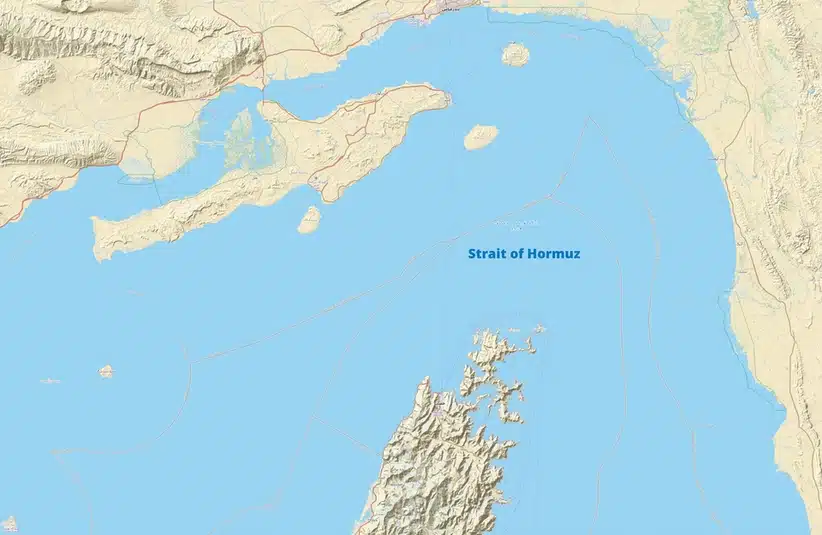
As tensions in the Gulf remained high, Iran continued grappling with the effects of the ongoing naval blockade in the Strait of Hormuz. The regime pushed its crude oil storage capacity to 64% by repurposing aging tankers and floating storage. The United States Treasury Department added unanticipated strain to the situation with sanctions levied on crude purchased from Iran.
Meanwhile, the IRGC moved to assert greater control over the Strait of Hormuz through its emerging insurance and security fee system, even as domestic economic pressures and public discontent mounted.
Strait of Hormuz Shipping Confrontation Amid US Blockade
The Islamic Revolutionary Guards Corps (IRGC) appears to be exploiting the current ceasefire through an insurance mechanism in place of the original toll system Iran sought to implement, according to a Reuters report on May 20, 2026, cited by the Institute for the Study of War (ISW). Interviews with some countries involved show that the transit framework elevates friendly partners such as Russia and China, while India and Pakistan obtain operational authority in line with negotiated terms. Vessels lacking an IRGC agreement must pay around $150,000 in security fees to limit the chance of Iranian maritime intervention, while any ship linked to the United States or Israel will be denied fully.
Shipping logs from Starboard Maritime Intelligence, integrated by the ISW, revealed that 16 vessels navigated this Iranian-controlled route between May 19, 2026, and May 20, 2026. This included a South Korean-flagged oil tanker and an Indian-flagged vessel. The real‑world groundwork for this system appeared as early as May 10, when the Iraqi government, then led by Prime Minister Mohammad Shia al‑Sudani, arranged safe transit for the Maltese‑flagged VLCC Agios Fanourios I as it carried Iraqi crude.
The Stakes Rise: Parallel Negotiation Efforts
The IRGC, through Fars News Telegram channel, threatened to expand military operations well beyond the Middle East region should airstrikes by the United States and Israel resume, the ISW reported. This is a reiteration of previous threats issued through Tasnim News on Feb. 2, 2026, where it was declared that any attacks from the West would cause triggered retaliation against Israel, International shipping chokepoints, and United States military bases in the area.
The ISW cited an IranIntl report noting that Pakistani Interior Minister Mohsin Naqvi traveled on May 20, 2026, to meet with Iranian officials to advance mediation. Qatar has also been playing a mediating role between the United States and Iran, which may be causing tensions with Pakistan. An Arab official speaking to Axios on May 20 stated that Qatar sent a delegation to Iran to get more tangible commitments from Iran over its nuclear program and to obtain clearer information from the United States about how it plans to handle Iran’s blocked financial assets.
Iranian Civilians: Preparing For War
The Associated Press (AP) reported from Tehran that IRGC members are now regularly showing the public how to handle Kalashnikov-style assault rifles, with weapons increasingly brandished across the capital as a show of defiance. Parades through Tehran feature military vehicles mounted with belt-fed Soviet-era machine guns, while at one mass wedding, a ballistic missile, similar to those used against Israel, adorned the stage. These displays come as President Donald Trump has threatened to restart the war if negotiations break down and Iran refuses to loosen its grip on the Strait of Hormuz.
One participant, 47-year-old Tehran resident Ali Mofidi, told the AP during a weapons training session: “This is necessary for all our people to get trained because we are in a war situation these days. If necessary, everyone should be available and know how to use a gun.”
The sessions, often led by the IRGC’s volunteer Basij force, include civilians of all ages, including boys and women, learning to assemble and fire assault rifles at training booths set up across the city. Beyond projecting strength abroad, these public militarization efforts serve multiple domestic purposes. AP said they aim to reassure hard-liners, provide a sense of purpose and entertainment amid economic hardship, including mass layoffs, business closures, and spiraling prices for food and medicine, and potentially deter internal dissent.
The regime’s violent crackdown on nationwide protests in January, which activists say killed over 7,000 people and led to tens of thousands detained, remains fresh in memory. Encouraging widespread armament could help suppress any new demonstrations against the theocracy.
On The Ground: Hezbollah and Israel
The ISW cited multiple Telegram messages through Hezbollah’s military media account, mmirleb, where it was said that Hezbollah defended itself as the Israeli Defense Forces (IDF) attacked in two major waves, utilizing different weapons such as small arms, anti-tank guided missiles (ATGM), mortars, first-person view (FPV) drones, and rocket-propelled grenades (RPGs). The waves of attacks lasted a substantial amount of time, with Hezbollah sustaining seven hours under fire, followed by another that lasted four hours. The Hezbollah group said it repelled the seven-hour siege, but there was no such confirmation after the second.
MTVLebanonNews posted through Telegram that the IDF caused the destruction of living quarters in Haddatha shortly after the second attack was launched on May 20, 2026. The ISW says that this may have forced Hezbollah back, based on previous engagements where the group has avoided extended, widespread attacks since the ceasefire was initially agreed upon on April 16, 2026.
