
The Universe Leaves Future Observers in the Dark Ages
The Universe, the ultimate cosmic stage, has a serious problem with keeping its distances straight. The Universe is expanding, which means the light we see from distant galaxies has been traveling for so long that the galaxy itself has moved way, way off from where it started. Astronomers have to use complex math to figure out where these things actually are right now, and it is a total mess. This is the kind of problem that makes you want to throw your hands up and say “it’s over there, probably.”
Cosmic Expansion Ruins Simple Math
As astrophysicist Paul Sutter recently laid out in Universe Today, the Universe is about 13.77 billion years old, so you’d think the farthest thing we can see is 13.77 billion light-years away. But per Sutter’s explanation, the most distant observable regions are actually about 45 billion light-years from us.
That is because the space between us and those ancient objects has been stretching like a cosmic rubber band the whole time the light was in transit. It is like trying to run to a friend who keeps sprinting away from you, and then you are shocked when they are farther than you expected. A lot of people get this wrong, and frankly, it is not their fault because the Universe refuses to play fair.
Pushing Past the Speed Limit
Here is where it gets really interesting: the Universe allows distant galaxies to recede from us faster than the speed of light. Now, before you call the physics police, this does not break any rules because the galaxies are not moving through space that fast; the space itself is growing. The expansion of space is not constrained by the speed of light, because it is the metric itself that is changing, which is a fancy way of saying the Universe does not care about your traffic laws.
Astronomers measure this recession by looking at redshift, which is basically the cosmic equivalent of a siren fading as it drives away. Sutter calls the point where that recession hits light speed the Hubble distance, and by his figures, about 13.77 billion light-years out, which is delightfully convenient but also deeply misleading.
Seeing the Unseeable
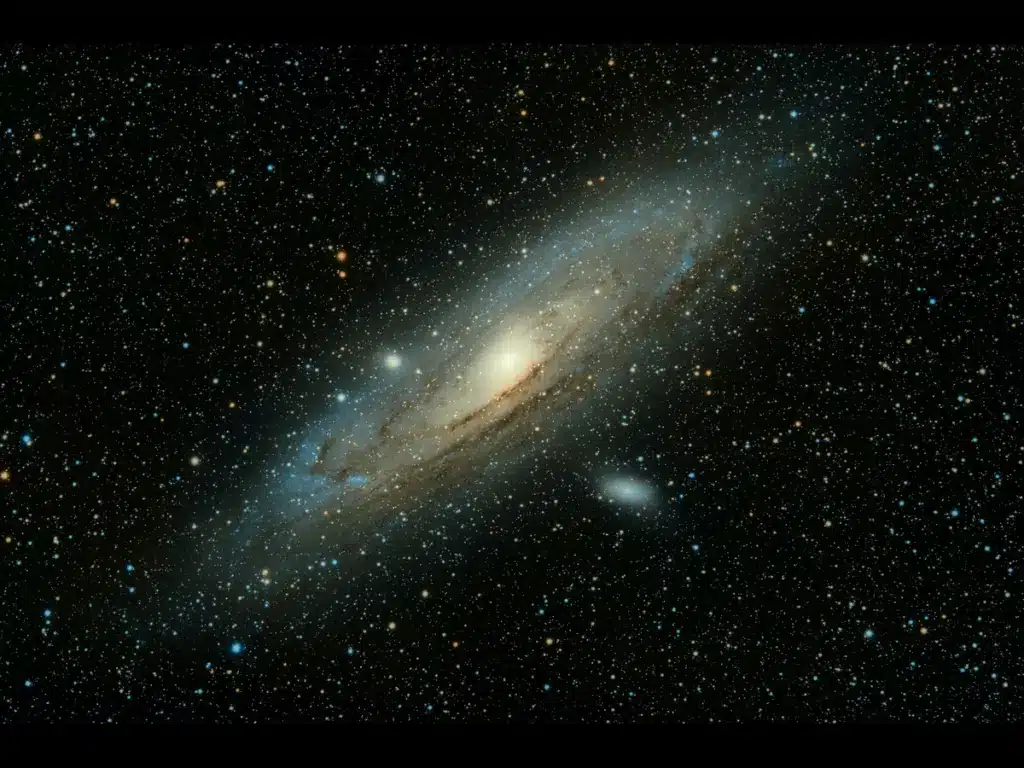
Even though galaxies beyond that Hubble distance are technically moving away faster than light, we can still see the ones that emitted their light a long time ago. When that ancient light was first sent out, those galaxies were much closer to us, so the photons had a fighting chance to reach our telescopes. “We are essentially looking at a fossil record of the Universe, where the light tells us where things were, not where they are now,” and that is a trip to wrap your head around.
This means our observable Universe is like a time machine that only shows us the past, while the present-day version of those galaxies is already over the cosmic horizon. It gives me a weird feeling of loneliness, like looking at old photos of friends who have since moved to another country and changed their phone numbers.
The Horizon That Ruins Everything
But the Universe has an even crueler trick up its sleeve: the cosmological event horizon. Per Sutter’s reporting, any light emitted right now from a galaxy farther than about 17 billion light-years will never, ever reach us because the expansion is accelerating. That is a hard stop, a cosmic “you shall not pass” that makes future astronomy incredibly depressing.
Because of dark energy, this horizon will eventually settle at a maximum of roughly 60 billion light-years. Still, even the stuff inside that boundary will get its light so stretched out that it will literally vanish from detection. So the Universe is not just expanding; it is actively erasing its own content from our view, which feels like a personal attack on anyone who enjoys looking at stars.
A Lonely Future in an Empty Universe
Fast forward about 100 billion years, Sutter writes, and all the galaxies beyond our Local Group will have faded into the cosmic void. Future observers will look up at the Universe and see only a few lonely galaxies clinging to each other, with no evidence of the vast, crowded cosmos we see today. They will have no idea about the Big Bang, no clue about the cosmic microwave background, and absolutely zero evidence of all the wild stuff happening out there right now.
That means they will probably think the Universe is a small, quiet place, and they will be completely wrong because the Universe has just been playing the long game of hiding its secrets. This future empties me out a little, knowing that all this glorious chaos we are studying right now will one day be invisible to anyone who comes after us.
