
3 Killed in Stark San Diego Mosque Shooting, Exposing Deep Security Gaps at U.S. Religious Sites

The shooting at the Islamic Center of San Diego is being investigated as a targeted attack involving two teenage suspects. Authorities say three people were killed when gunfire broke out near the mosque, marking one of the deadliest recent attacks tied to a place of worship in the United States.
Investigators are reviewing evidence that could point to a bias-related motive, including reported anti-Islamic material connected to the suspects. Officials have not yet released full details about charges or intent, and the case remains active. But one detail is already starting to stand out, and it is likely to shape how this case is understood moving forward.
Warning Signs Raise Questions About Prevention
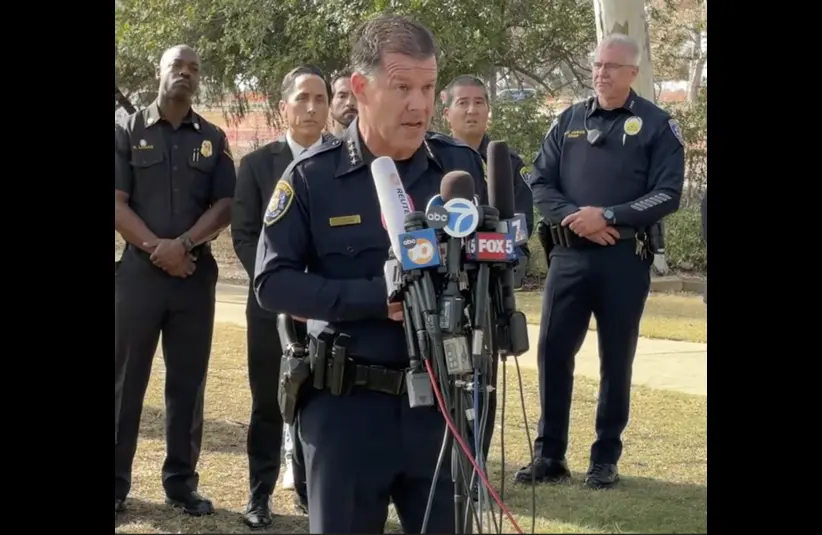
One of the most significant developments in the investigation centers on what happened before the shooting. According to San Diego Police Chief Scott Wahl, the mother of one of the suspects called police roughly two hours before the attack. Initially reported as a runaway situation, the call quickly escalated as more information came in.
The teen was believed to be suicidal, and several firearms were reported missing from the home, along with a vehicle. Investigators also learned the teen was not alone and was possibly traveling with another individual, both dressed in camouflage. “The information that she was gathering and conveying to us began to elevate the threat level that we were perceiving,” Wahl said during a news conference.
On paper, the initial report may not have met the threshold for immediate intervention. But as details continued to develop, the situation became more urgent. That is now the focus of the investigation: what happened in the window between the call and the shooting.
Security Presence Made a Critical Difference
If there is one detail that continues to surface, it is how much worse the situation could have been. A security guard at the mosque is credited with intervening during the shooting, likely preventing additional casualties. Officials have not released full details of that response, but the impact is clear. That moment is doing a lot of heavy lifting in this story, underscoring how much depends on real-time decisions.
Many religious institutions are no longer asking whether they need security. They are figuring out how much they can realistically maintain. This is especially true as threats have become more frequent and less predictable.
San Diego Shooting: A Familiar Pattern
The San Diego shooting does not exist in isolation. It fits into a pattern that has become increasingly difficult to ignore, particularly involving younger suspects and warning signs that do not always lead to immediate action.
In many cases, there are signals ahead of time. Family members raise concerns. Behavior shifts. Information surfaces in fragments rather than a clear, actionable threat. Then something breaks through the cracks. It is a familiar pattern, and not in a reassuring way. That is part of what continues to draw attention in cases like this.
Recent News From Total Apex Herald
- San Diego Mosque Shooting Leaves Five Dead as Community Mourns Heroic Security Guard
- UAE’s Enduring Strength: A Strategic Pipeline for a More Secure Energy Future
- President Donald Trump Threatens Amid Peace Talks
Federal programs designed to help religious institutions improve security do exist, but access is inconsistent. Smaller organizations often face challenges navigating the process or securing enough funding to make meaningful upgrades.
The result is uneven protection, and that gap is where much of the concern continues to land.
The Challenge of Stopping Violence Before It Starts
Cases involving teenage suspects add another layer of complexity. Preventing violence among minors often depends on identifying risk early, sometimes before any crime has been committed.
That process can involve families, schools, mental health professionals, and law enforcement, all operating within strict legal boundaries. Even when warnings are reported, the path to intervention is not always straightforward. But waiting for clear evidence of imminent danger can mean acting too late. The timeline in this case, particularly the gap between the initial call and the attack, is likely to remain a point of scrutiny.
What This Case Could Change
For now, the investigation is ongoing, with officials working to determine motive, intent, and potential charges. But the broader impact of the case may extend beyond the individuals involved. Each incident like this adds pressure to reassess how threats are evaluated and how quickly law enforcement can respond when situations evolve in real time. It also reinforces something many communities already understand: preparation has quietly become part of everyday life.
The shooting at the Islamic Center of San Diego is still unfolding. But the questions it raises, especially about timing, warning signs, and response, are not new and are unlikely to fade anytime soon.
